Observing Coastal Life: Notes from a Field Researcher's Diary
As a field researcher, my reporting office is often far removed from city streets and concrete buildings. Instead, I report to duty along with countless other creatures that are hard at work, performing jobs that keep ecosystems functioning smoothly. Some are engineers, some are recyclers, some are performers, and others are master tricksters.
Over the past year, during field visits across India's coastal wetlands, I have had the privilege of observing many of these remarkable co-workers. In this photo story, I have selected a few that stood out to me.
Signature Spider – The Trickster
Scientific Name: Argiope anasuja
Suspended in mid-air, the Signature Spider is a master of deception. It weaves a distinctive zig-zag pattern called a stabilimentum into its web, which reflects UV light and warns birds of the web's presence. While this pattern can also alert insects, the spider counters this disadvantage by holding its legs together and tricking its prey into thinking it is a harmless four-legged insect rather than an eight-legged predator.
The zig-zag signature of this spider has inspired humans to develop UV-patterned stickers on glass buildings that help reduce bird collisions.
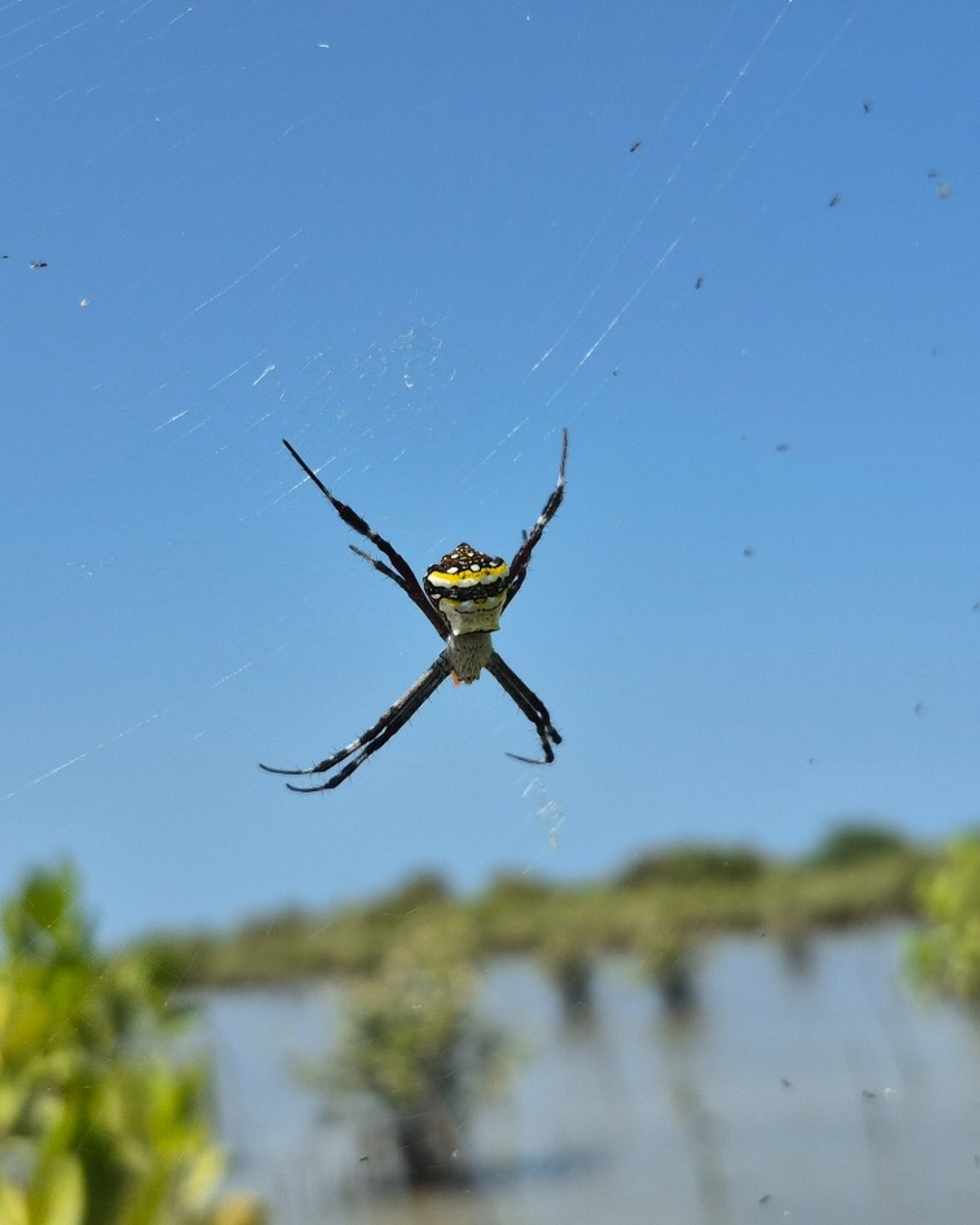
Photo: Signature Spider in Pulicat Lake, Andhra Pradesh. March 2026. MSSRF / Utchimahali Mariappan
Sand Bubbler Crab - The Hardworker
Scientific name: Scopimera spp
During a field visit to a beach in Andhra Pradesh, I noticed hundreds of perfectly round sand pellets arranged in intricate patterns. These were the handiwork of the Bubbler Crab. As the tide recedes during the day, the crab emerges to report to duty – recycling the organic matter from the sand and depositing the cleaned sand as tiny pellets around its burrow. In the evening, higher tides wash away their artwork, preparing the beach sand with organic matter for another day's work. Visually, these pellets help the crab identify areas that have already been processed. Personally, I like to imagine that they serve as daily performance reports for "Bablu" the Bubbler Crab, proving to his manager that he has put in a productive day at work.
Beyond their artistry, these crabs help reduce organic matter in the sand and maintain healthy coastal ecosystems.
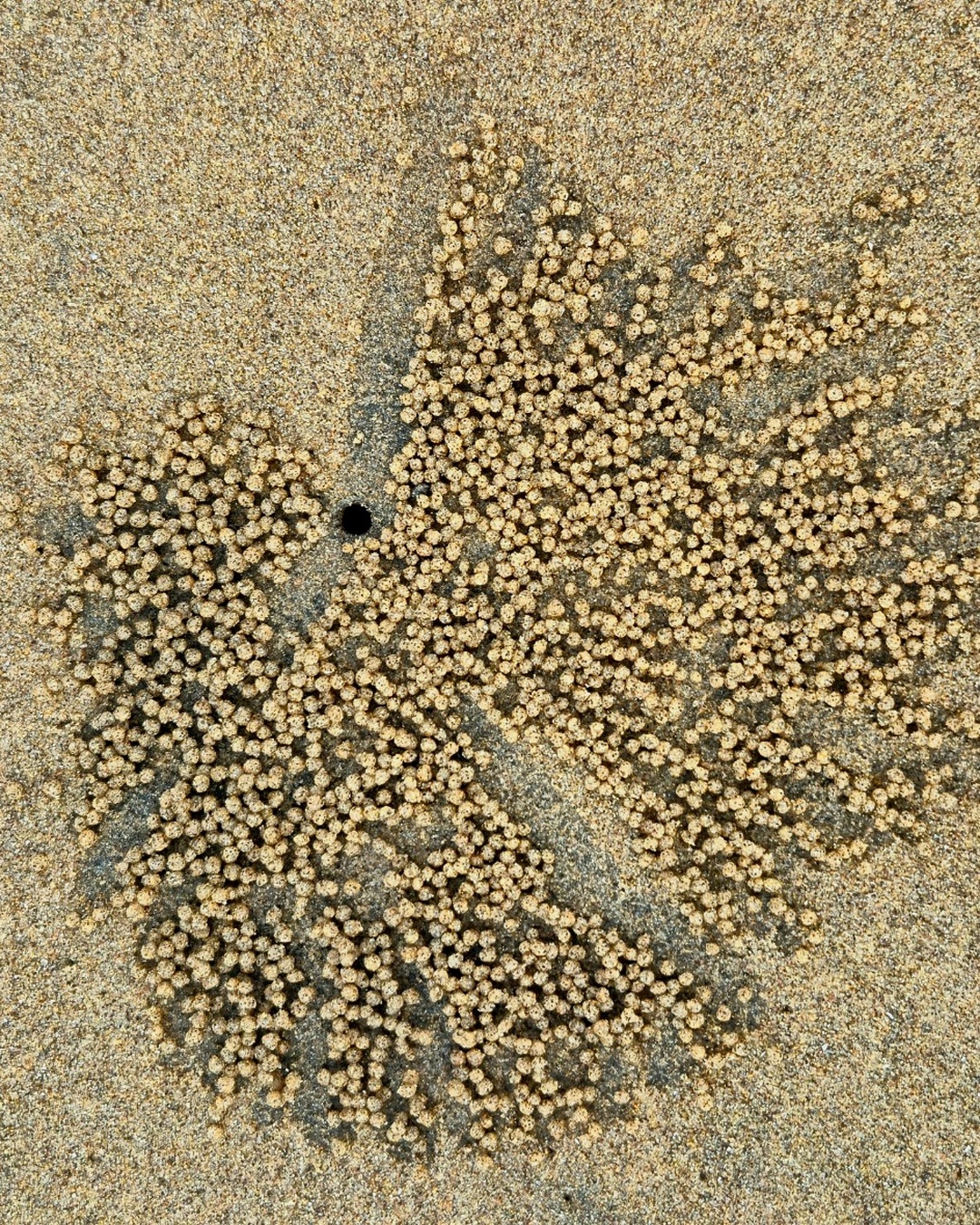
Photo: Bubbles formed by Sand Bubbler Crab spotted in the Krishna Wildlife Sanctuary, Andhra Pradesh. January 2026. MSSRF / Utchimahali Mariappan
Milky Mangrove – The Long-distance lovers
Species: Excoecaria agallocha
Bees and other pollinators play matchmakers for this dioecious mangrove. The dioecious plants have separate male and female flowers bearing trees, thereby needing an ‘agent’ to transfer pollen from the male flower to the female flower. To attract these agents aka pollinators, it has nectar-rich flowers but keeps humans at a distance with a toxic milky latex that can cause temporary blindness.
This mangrove, like its cousins, stores salt in its leaves and sheds them as a means to expel excess salt accumulated within the plant. Perhaps it offers a simple life lesson too: when stress and toxicity build up, sometimes the best thing to do is to let go.
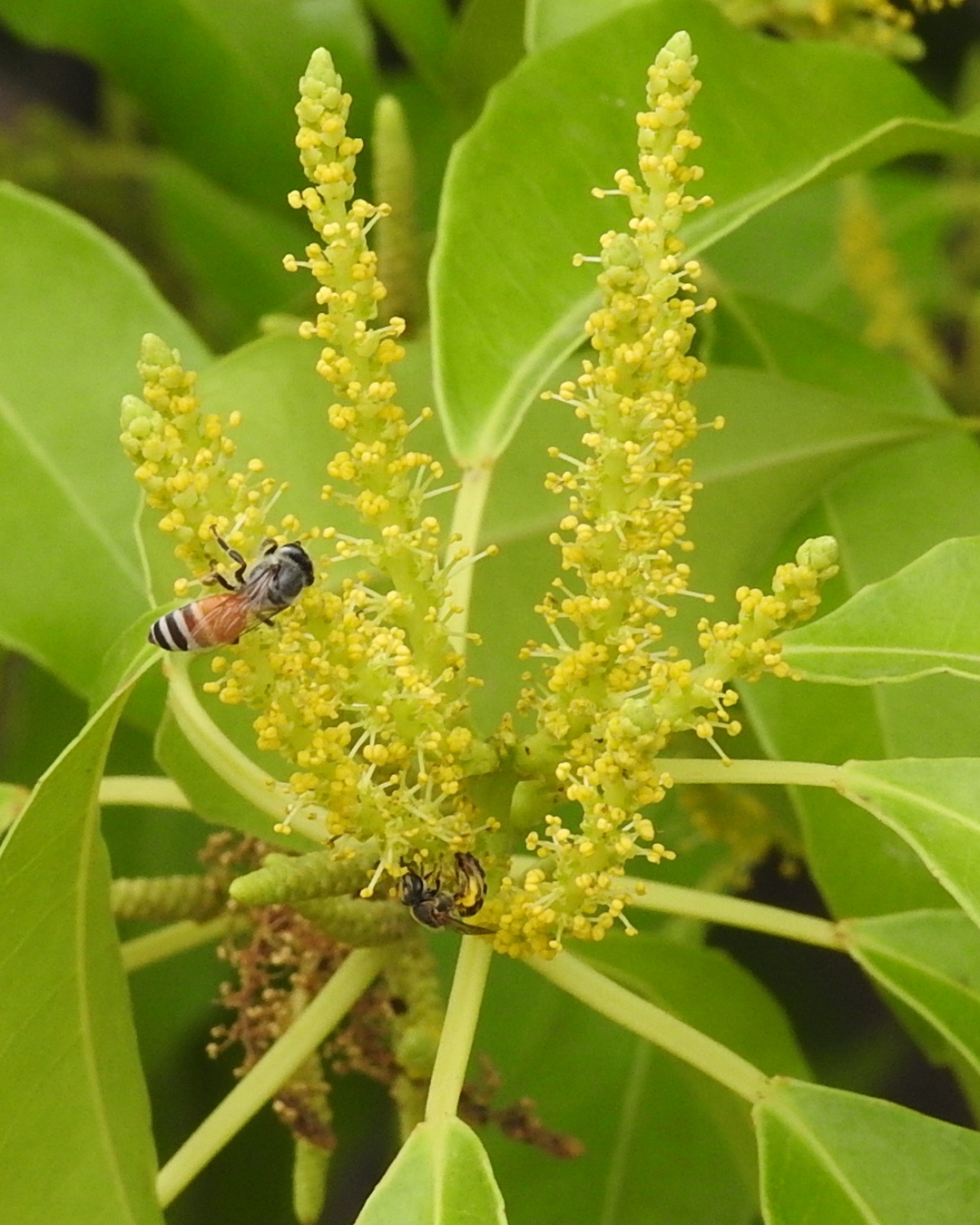
Photo: Bee Pollination in Milky Mangrove in Machilipatnam, Andhra Pradesh. July 2025. MSSRF / Utchimahali Mariappan
Ravan's Mustache – The Protector
Scientific name: Spinifex littoreus
Along India's coastal dunes grows a plant with an unusual name and an even more important job. Commonly known as Ravan's Moustache, this plant helps stabilise coastal sand dunes by binding loose sand with its extensive roots and runners. Its sharp, inward-curled leaves deter grazing animals. The rigidity of these curved leaves comes from the accumulation of silica within their tissues, giving them their characteristic toughness and resilience. Anyone who has accidentally stepped on one will quickly discover just how effective those defensive spikes can be.
This hardy grass creates stable habitats for many coastal species and plays a vital role in protecting shorelines from erosion. Remarkably, it's lineage is thought to date back to the Mesozoic era, making it older than most of the other ecosystem co-workers featured here.
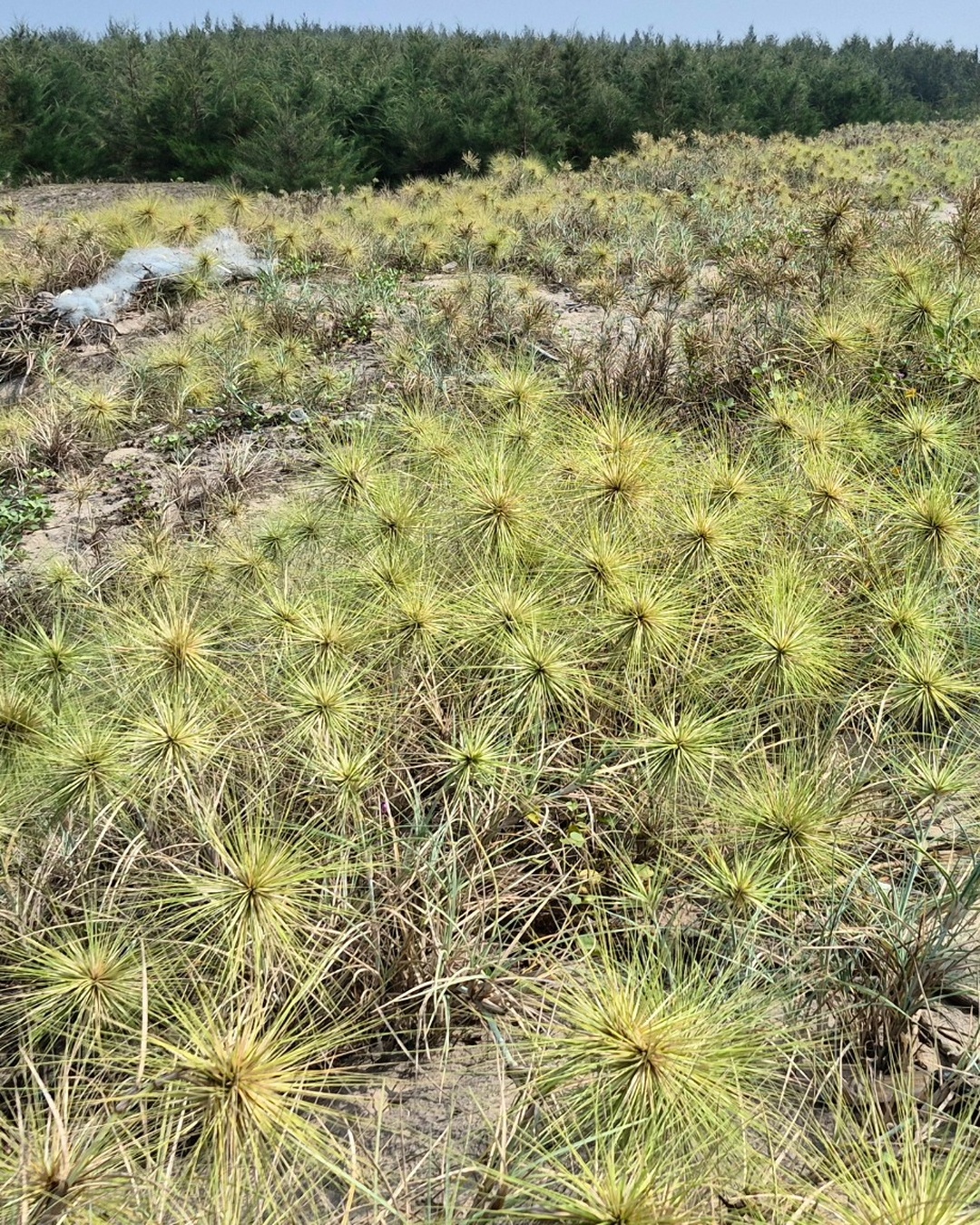
Photo: Ravan's Mustache in Chinna Gollapalem, Krishna District, Andhra Pradesh. January 2026. MSSRF / Utchimahali Mariappan
Red Berry Snails – The Tiny Health Inspectors
Scientific name: Sphaerassiminea miniata
At first glance, these tiny red creatures look like berries scattered across the mangrove forest floor. In reality, they are Red Berry Snails, among the smallest mangrove inhabitants, measuring just 4-8 mm in size. Unlike most marine snails, they possess lungs instead of gills, allowing them to thrive on exposed mudflats during low tide. Scientists have found that Red Berry Snails are highly sensitive to changes in environmental conditions. Their presence, abundance, and health can provide valuable clues about the condition of mangrove ecosystems, making them excellent bioindicators.
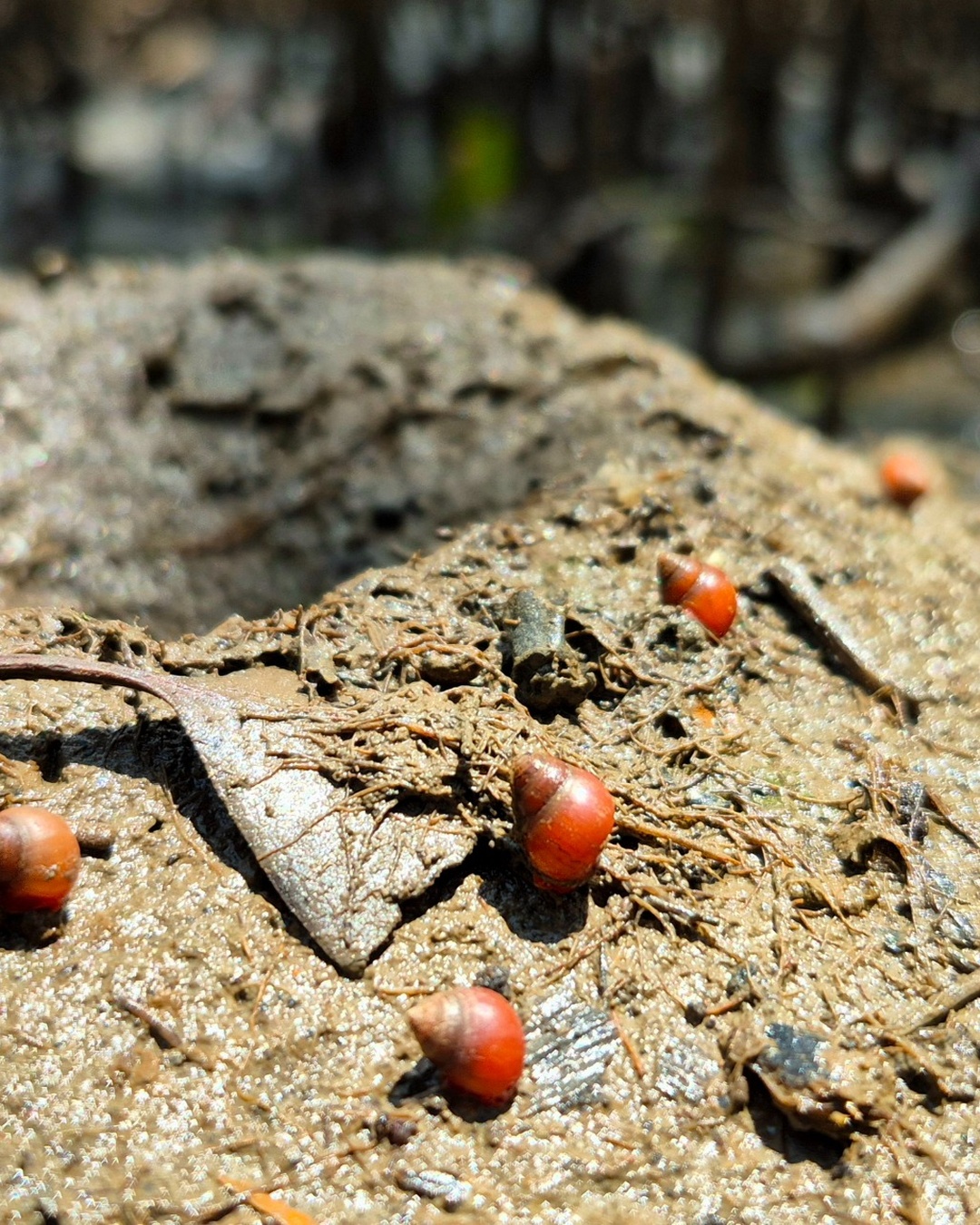
Photo: Red Berry Snails in Coringa Wildlife Sanctuary, Andhra Pradesh. April 2026. MSSRF / Utchimahali Mariappan
Violet Crab – The Rapper
Scientific name: Episesarma versicolor
The Violet Crab has perfectly adapted to its ecosystem as it often scales mangrove trees for up to 6 meters to escape underwater predators during high tides. They feed on mangrove leaves thereby converting green biomass into detritus (organic matter containing leaves and other plant parts) and eventually to soil, helping in cycling of carbon and other elements. Their courtship behaviour is equally remarkable. Male crabs strike their claws together to make a ‘rapping’ sound that attracts mates. Since this crab is consumed as a traditional food item, researchers are trying to find ways to support its sustainable cultivation and reduce harvesting pressure.
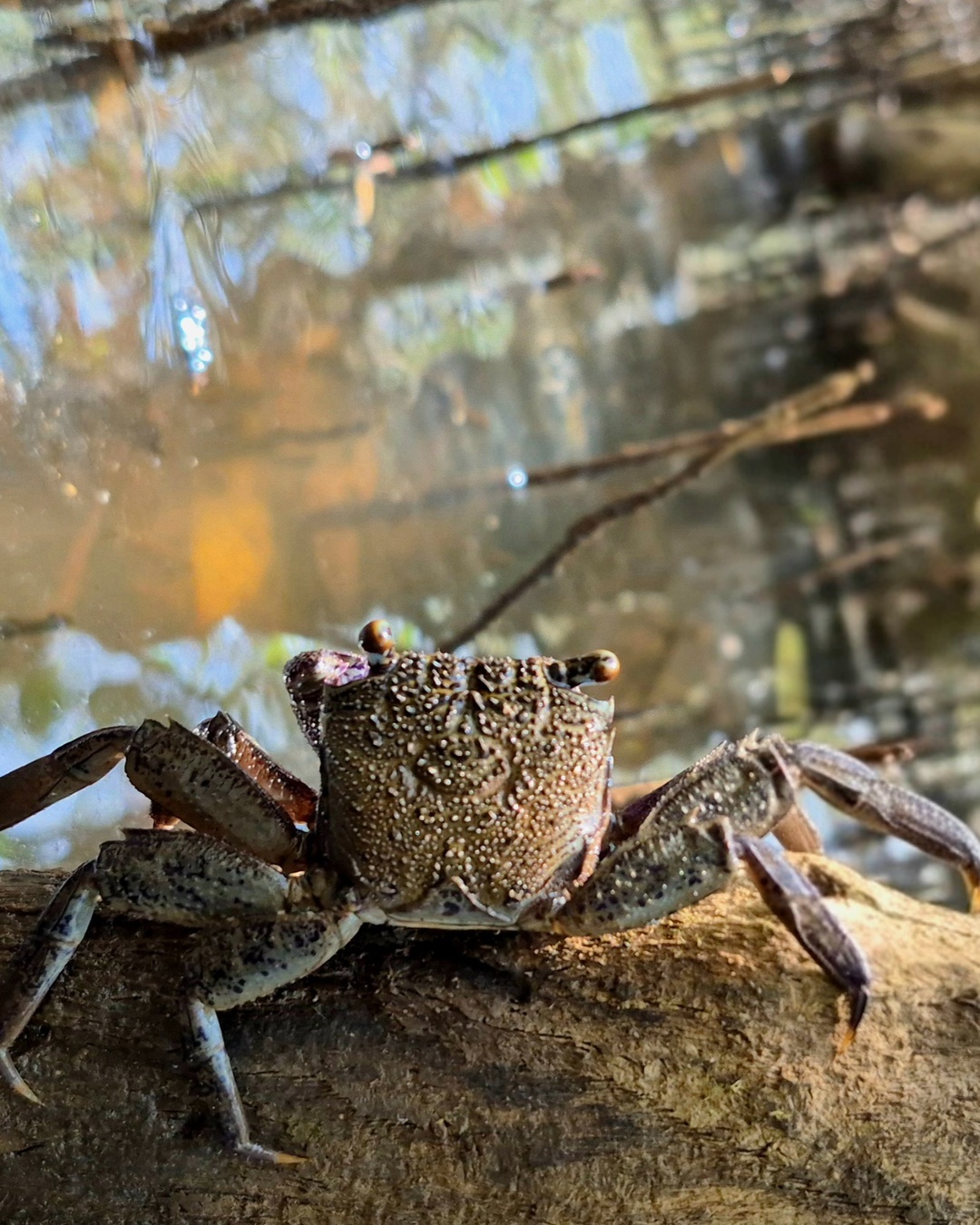
Photo: Violet Crab in Coringa Wildlife Sanctuary, Andhra Pradesh. April 2026. MSSRF / Utchimahali Mariappan
Strawberry Land Hermit Crab – The Garbage Collector
Scientific Name: Coenobita perlatus
With its bright orange-red body, the Strawberry Land Hermit Crab is one of the most colourful residents of tropical shorelines. These hermit crabs perform an important clean-up service by feeding on decaying organic matter. In doing so, they help recycle nutrients and prevent the build-up of waste within coastal ecosystems. To facilitate breathing on dry lands with gills they make a moist microenvironment by carrying seawater inside their shells. Because they depend on intact shells for protection, they can also serve as important indicators of coastal ecosystem health.
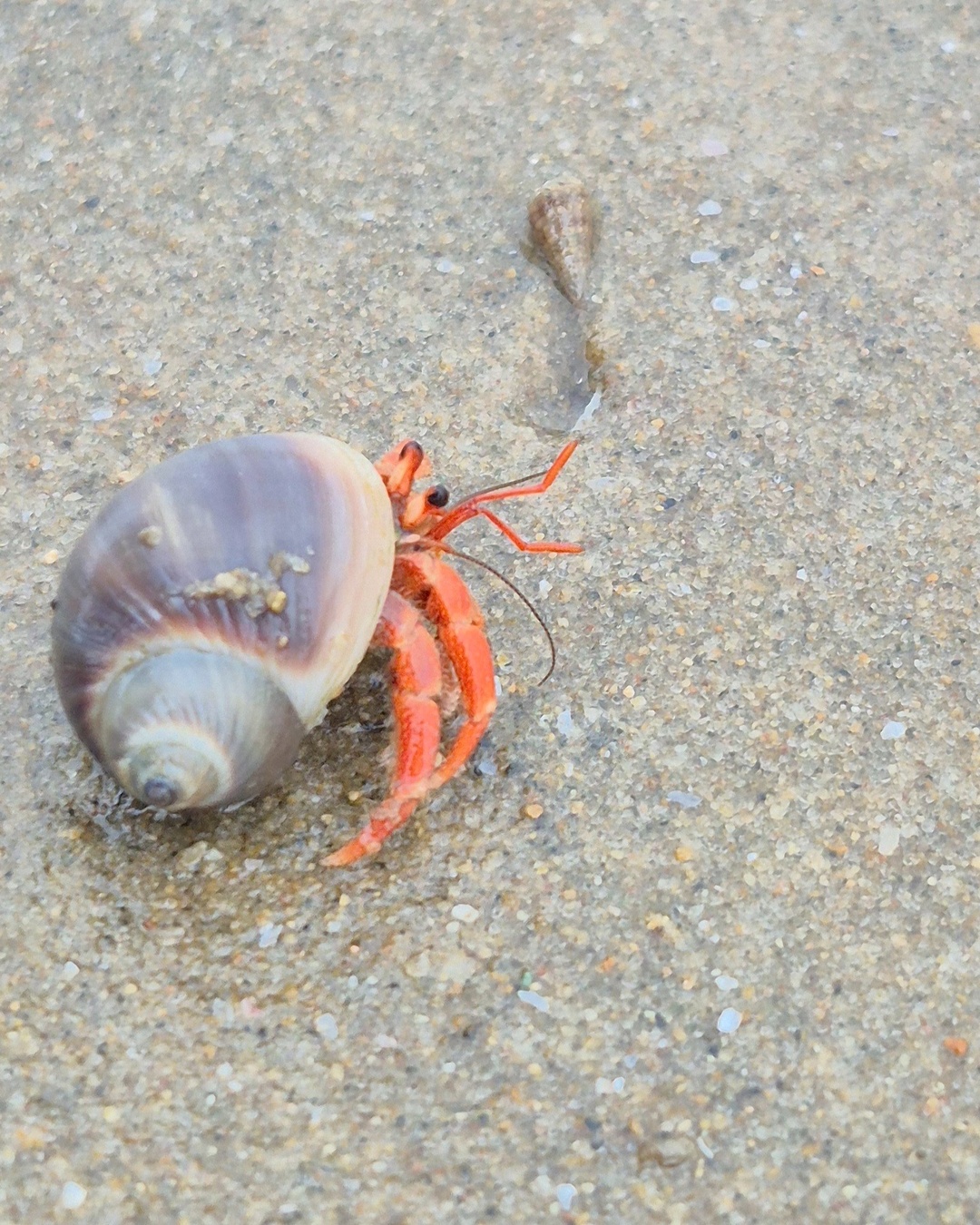
Photo: Strawberry Land Hermit Crab in Pulicat Lake, Andhra Pradesh. December 2025. MSSRF / Utchimahali Mariappan
Sea Purslane – The Salinity Manager
Scientific Name: Sesuvium portulacastrum
Most plants struggle to survive in highly saline environments. Sea Purslane, however, thrives in salty conditions by storing excess salt in the swollen vacuoles of its fleshy leaves. Its delicate pink flowers bloom for only a few hours each day to attract pollinators, while its creeping stems root at every node, helping stabilise coastal soils and dunes.
By tolerating extreme conditions and securing coastal sediments, Sea Purslane plays a vital role in maintaining shoreline ecosystems.
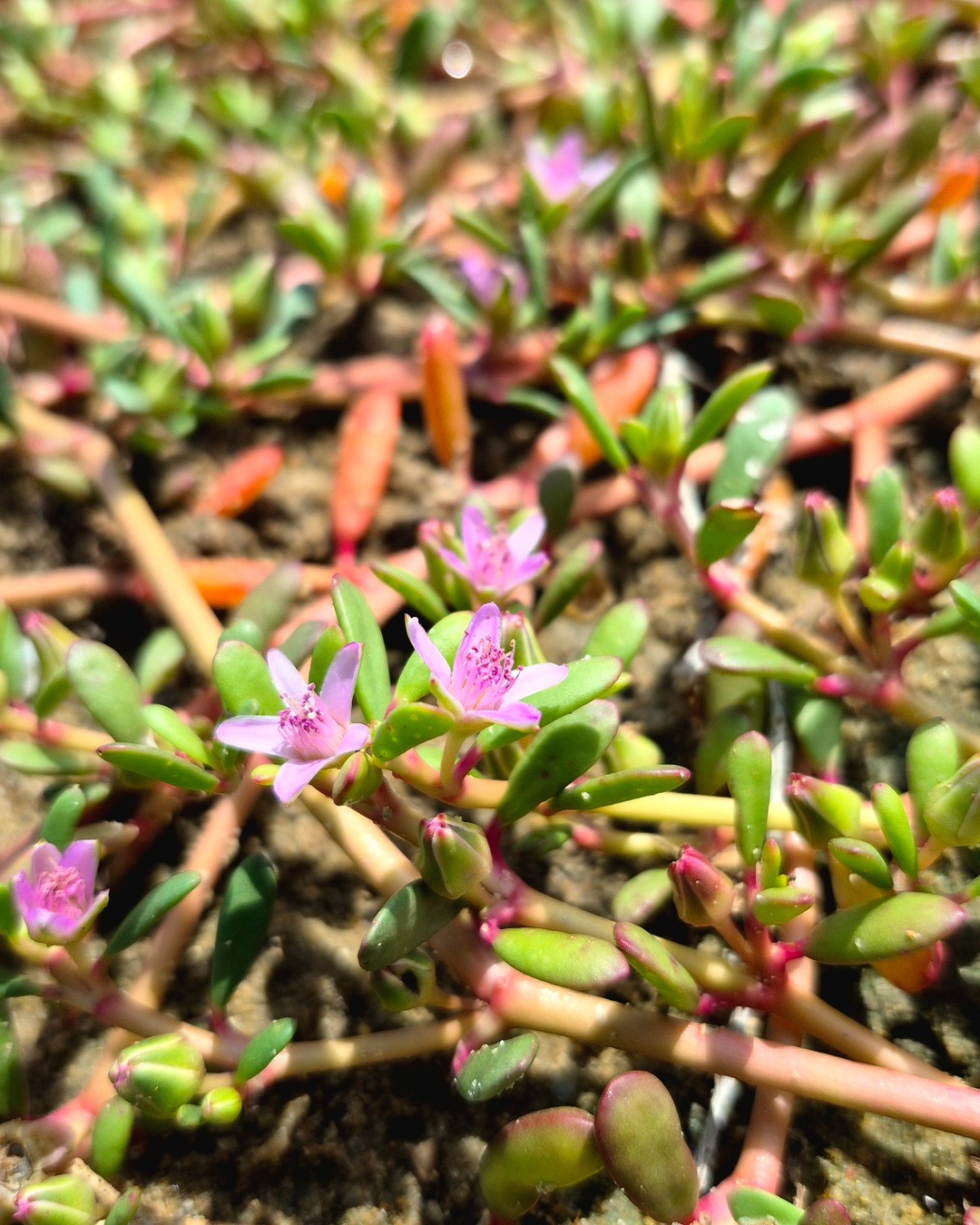
Photo: Sea Purslane in Pulicat Lake, Andhra Pradesh. May 2026. MSSRF / Utchimahali Mariappan
Fiddler Crab – The Performer
Scientific name: Austruca annulipes
The Ring-Legged Fiddler Crab is easily recognised by its banded legs and the oversized claw of the male. During the breeding season, males perform a theatrical display by rhythmically waving their oversized claw, resembling violinists playing an invisible instrument to attract females. When they aren’t ‘performing’, they report to duty as engineers, digging burrows up to 30 cm deep, aerating the soil and improving nutrient exchange in coastal wetlands.
This engineering work benefits plants and countless other organisms that depend on healthy sediment conditions.
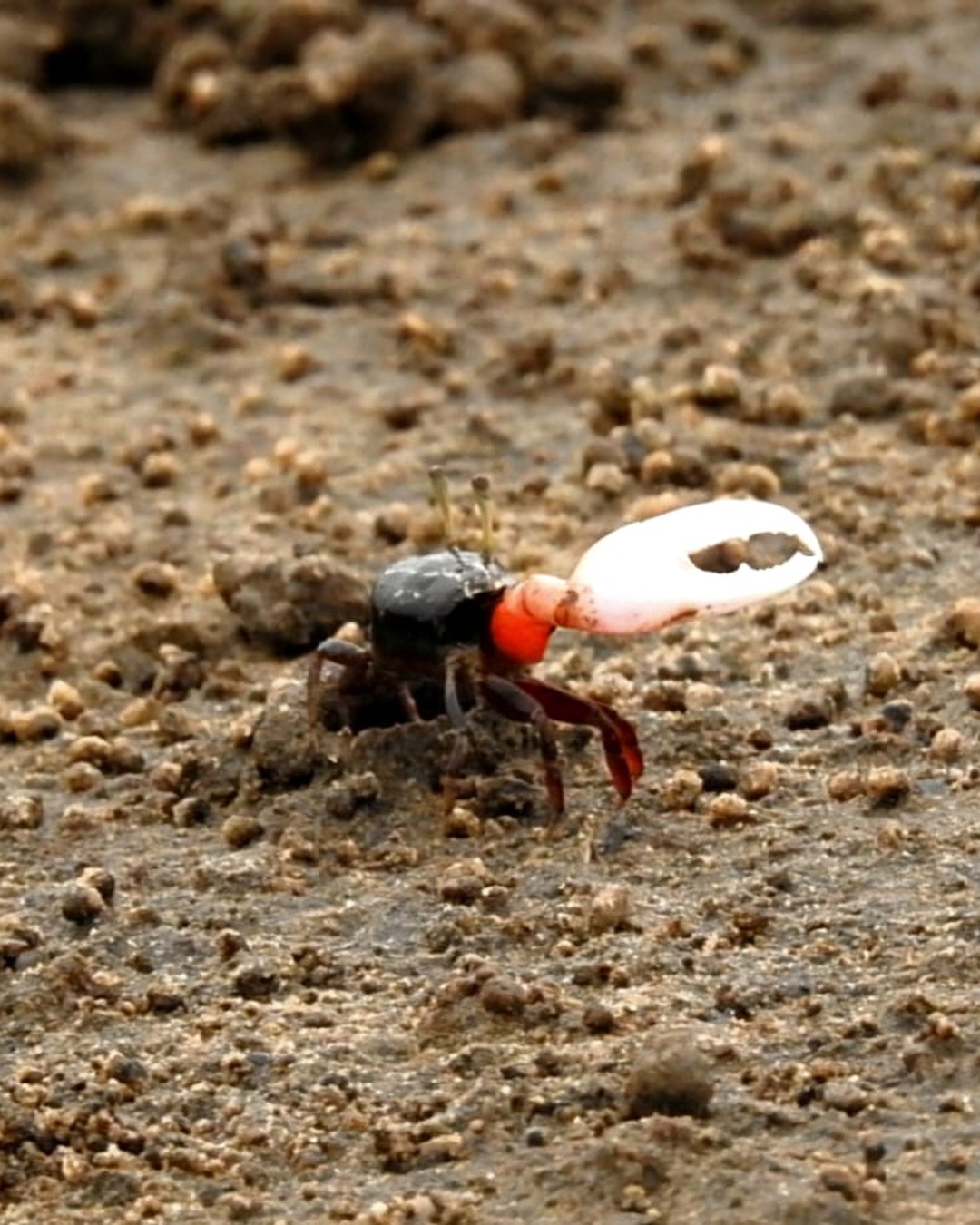
Photo: Fiddler Crab in Machilipatnam, Andhra Pradesh. July 2025. MSSRF / Utchimahali Mariappan
The next time you walk through a mangrove forest, along a tidal mudflat, or across a sandy beach, take a moment to look closer. Beneath every footprint lies a bustling workforce of engineers, recyclers, pollinators, performers, and caretakers. Their jobs may go unnoticed, but they perform essential services for preserving and maintaining the ecosystems they inhabit.
As researchers, when we arrive with notebooks and datasheets in hand to identify, measure, record and understand the natural world, we get an opportunity for a closer look into the world of these wonderful creatures and plants. Along with the important data, we carry back memorable lessons from the field by observing these tireless co-workers and their extraordinary ways that keep nature running smoothly.
Dr. Utchimahali is a scientist at the Wetlands and Coastal Ecosystems program at MSSRF.
Shriya Naidu is a Science Communications Manager at MSSRF.