How Dairy Farming is Helping Neela Secure Her Family’s Future
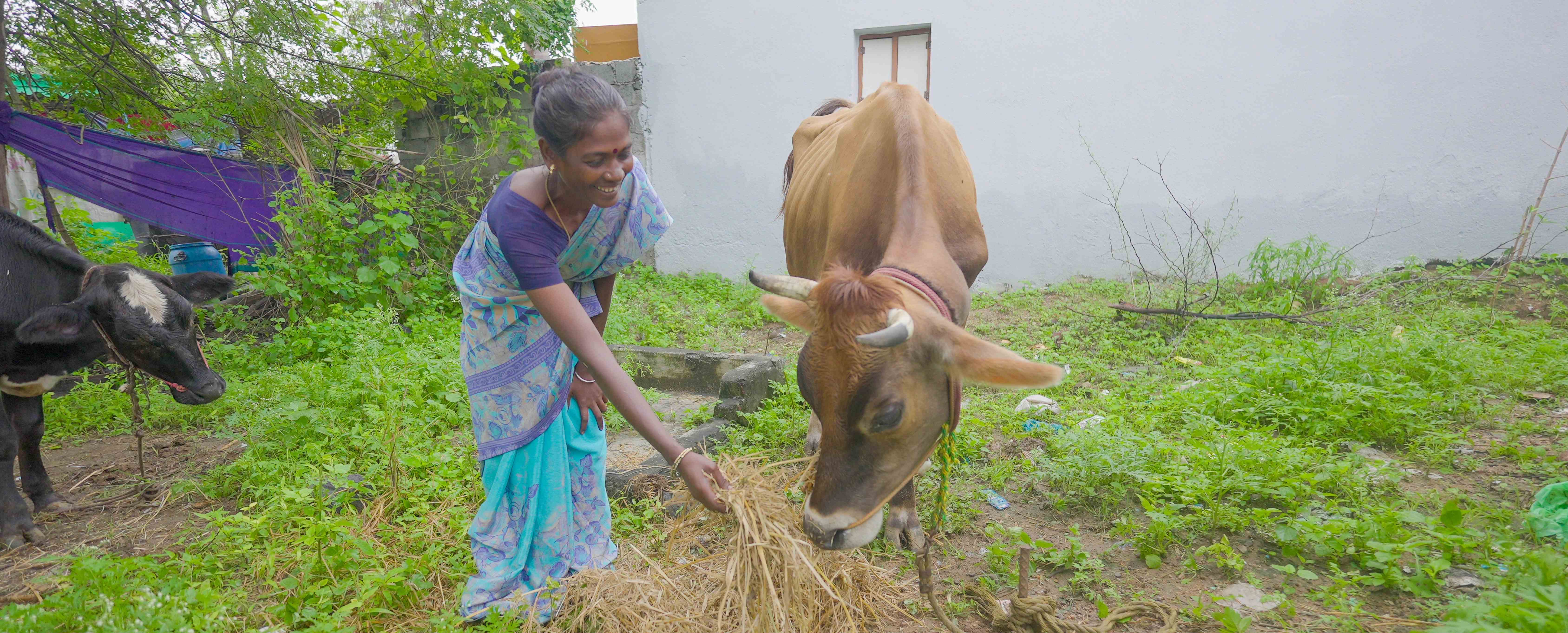
Every morning, before the rest of her village wakes up, 35-year-old Neela is already at work in her cowshed in Manikaraiyanpattai village of Dindigul district of India’s southern state of Tamil Nadu. For Neela, dairy farming is not just a livelihood, it is the backbone of her family’s survival and stability.
Neela manages a two-acre farm where she cultivates paddy, cotton, and maize. With her husband suffering from a chronic leg injury, she is the sole breadwinner for her household, supporting two school-going children—a daughter in Class 12 and a son in Class 9 at a nearby government school. While crop farming provides seasonal income, it is dairy farming that has given Neela year-round financial security.
“For us, the cows are part of our family,” Neela says. “They have stood by us in the most difficult times.” Her daughter has even named each cow, reflecting the deep bond between the family and their animals.
Breaking free from exploitation
For several years, Neela struggled as a small-scale dairy producer. With limited knowledge of scientific dairy practices and no bargaining power, she sold milk to private vendors who paid anywhere between ₹16 and ₹28 per litre. Payments were irregular, and when her cows fell ill, veterinary expenses of ₹200–300 per visit placed an additional burden on her already fragile finances.
This changed with the establishment of a milk collection centre run by Kulumai Milk Producers Company, a Farmer Producer Organization (FPO) operating in the region. For Neela, the collection centre marked a turning point bringing transparency, fair pricing and dignity to her work as a woman dairy farmer.
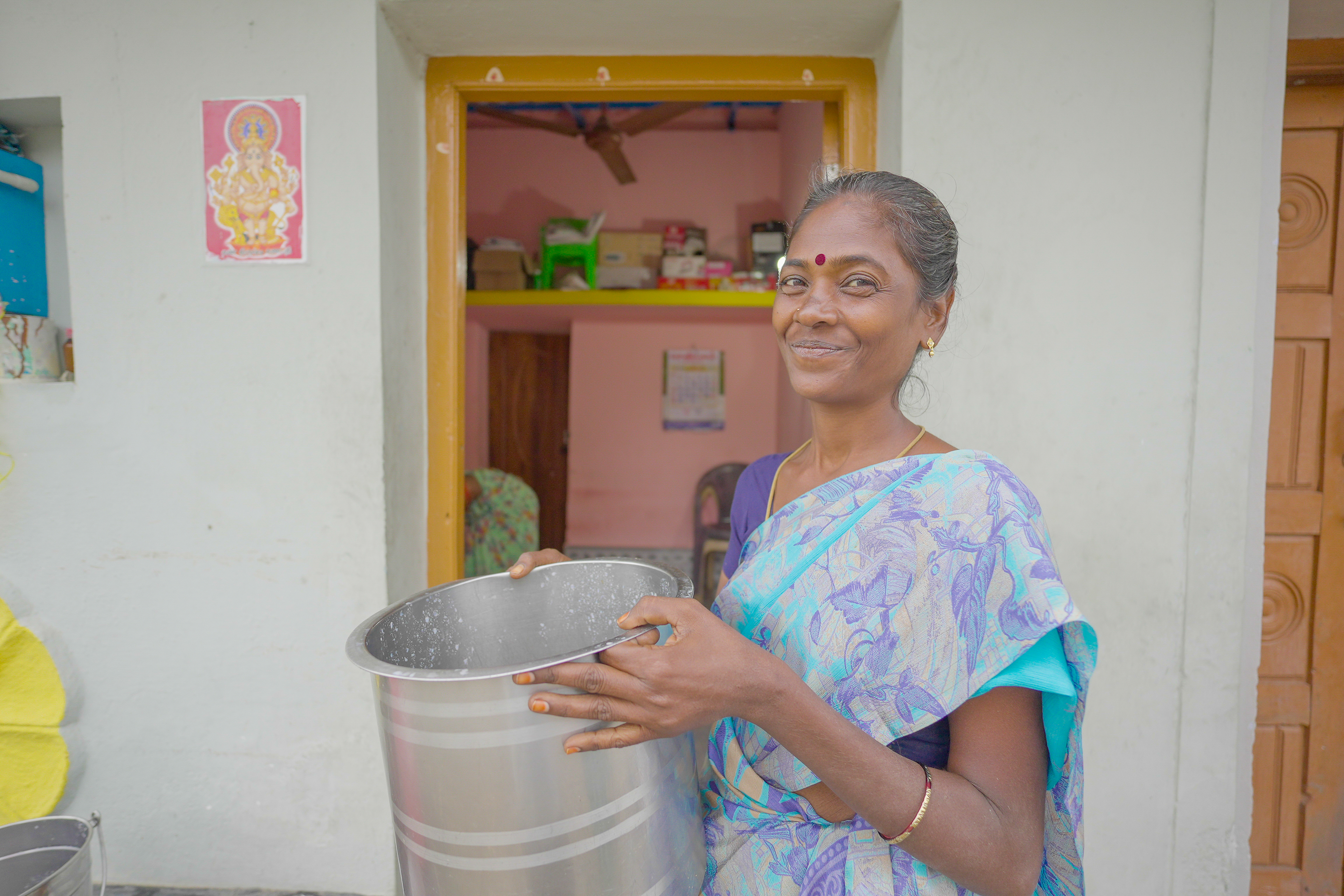
Holding a milk vessel at milk collection center, Neela prepares for her daily routine as a dairy farmer. Photo: Lakshmi Kanth Bharathi
Today, Neela delivers milk daily to the centre, where quality is tested in her presence. She receives an instant printed receipt and an SMS on her mobile phone detailing quality parameters and payment rates. Based on quality, she now earns up to ₹37 per litre, nearly double what she once received.
“There are no middlemen anymore,” Neela says. “I know exactly how much I will be paid and why.”
According to Neela, the regular income as a dairy producer has helped shape her identity as a woman working in the agri-food systems. “I always worked in the fields, but the steady income from selling milk has truly empowered me,” she said, adding that while farm income would vary depending on climate, milk production has been more reliable for her.
“In our village, men are usually seen as the breadwinners, even though it is not always true. I am glad that I was able to build my own identity in the village and ensure that my children receive a good education,” she said.
Strengthening women’s role in agri-food systems
Beyond fair pricing, Kulumai provides women dairy farmers with access to services that are often out of reach for small producers. Regular veterinary health camps, preventive care, and free medicines have significantly reduced losses due to disease. Scientific training on animal nutrition and management has improved milk quality and productivity.
When Neela decided to expand her herd, Kulumai facilitated access to a low-interest loan with a repayment schedule aligned to her income cycle, an opportunity rarely available to women farmers through formal channels.
This integrated support has enabled Neela not only to increase her income but also to build resilience against shocks related to health, climate variability, and market uncertainty. Her dairy enterprise contributes directly to local food systems while ensuring her children can continue their education.
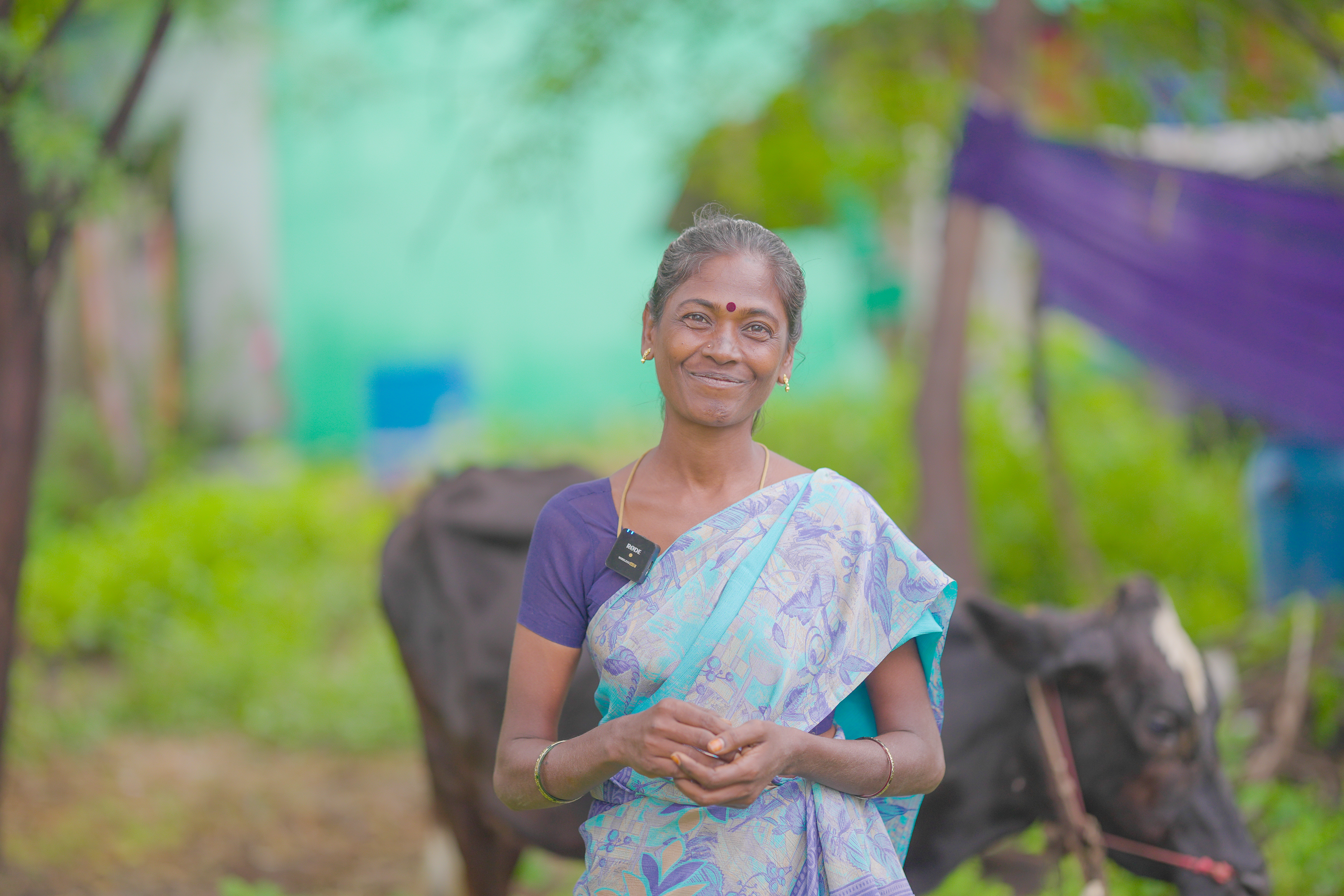
Neela, a 35-year-old woman farmer from southern India. Photo: MSSRF/Lakshmi Kanth Bharathi
An enabling ecosystem for women farmers
Kulumai Milk Producers Company has been facilitated by the M.S. Swaminathan Research Foundation (MSSRF), which has played a critical role in strengthening the FPO’s governance, financial management, market linkages, and long-term sustainability.
Today, Kulumai supports many women dairy farmers across the region, demonstrating how collective institutions, when designed with a gender-responsive approach, can unlock the full potential of women in agrifood systems.
Neela’s story reflects a broader truth: when women farmers have access to fair markets, knowledge, finance and institutional support, they become powerful agents of food security, poverty reduction and rural resilience.
“As long as my cows are healthy, my family will be secure,” Neela says.
Lakshmi Kanth Bharathi is a Senior Executive – Digital Communications at MSSRF