MSSRF Coastal Clean Ups Remove Over 10,000 Kg of Marine Debris
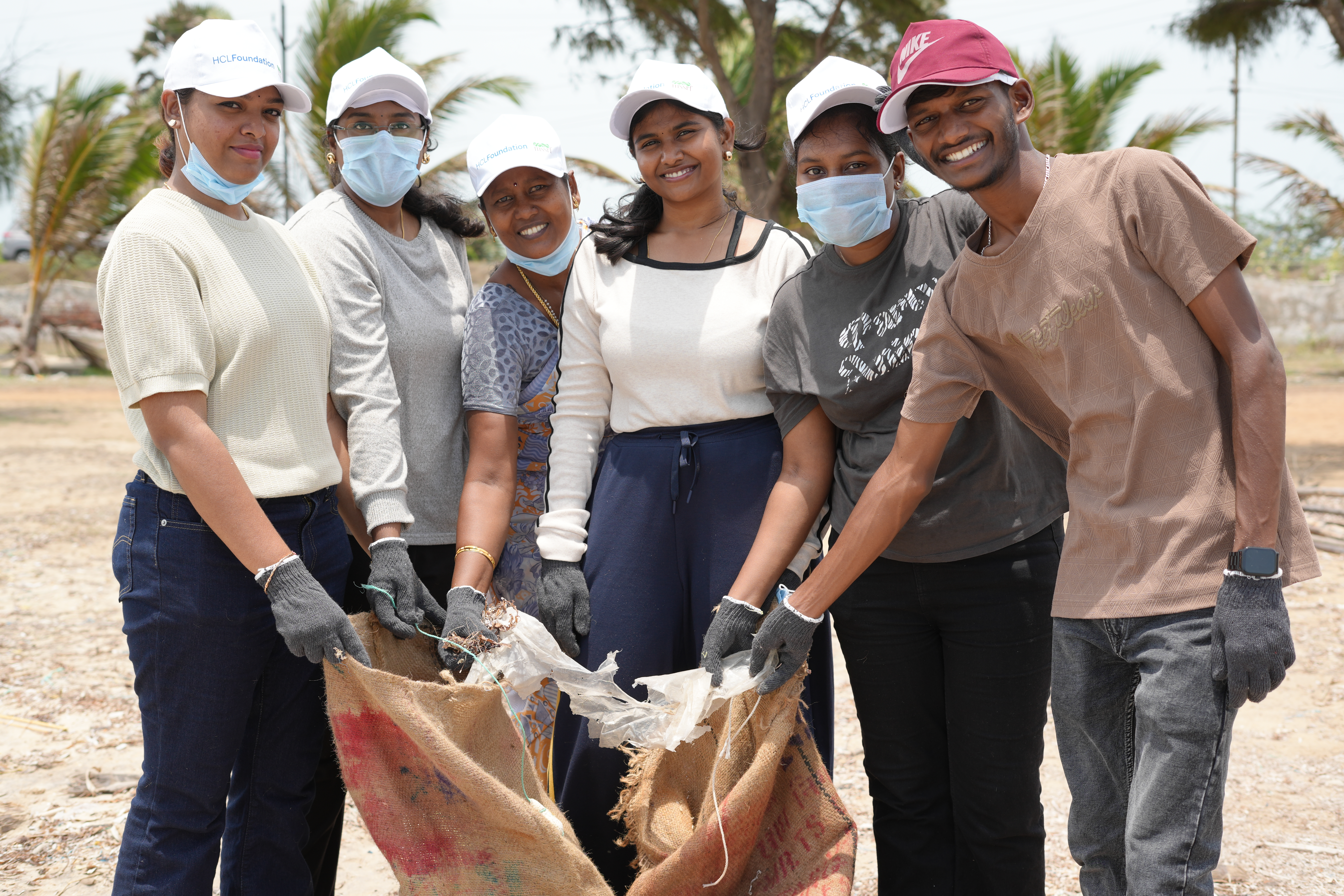
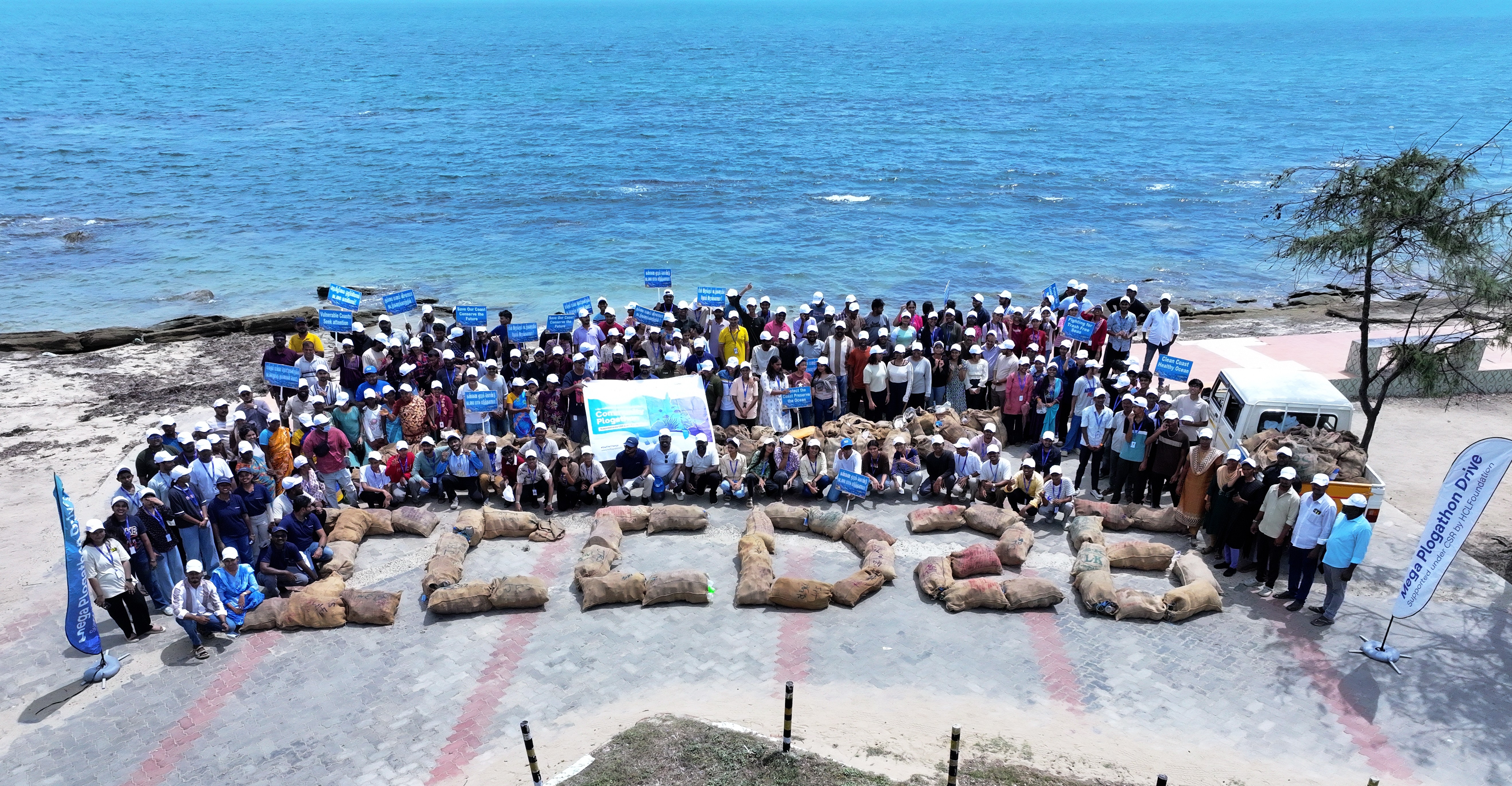
More than 10,000 kg of marine debris were removed from India's coastlines through 55 beach clean-ups coordinated by the M.S. Swaminathan Research Foundation (MSSRF) and its partners under the nationwide Swachh Sagar, Surakshit Sagar 5.0 campaign, on the International Coastal Cleanup Day (ICCD) 2026.
Supported by the Indian National Centre for Ocean Information Services (INCOIS), Ministry of Earth Sciences (MoES), and the HCL Foundation, the campaign covered coastal areas in Tamil Nadu, Andhra Pradesh, Kerala, Karnataka, and the Union Territory of Puducherry. It mobilised over 4,000 volunteers across 135 km of coastline.
Launched on 11 August 2026 at Chennai's Marina Beach, the campaign began with more than 1,000 volunteers. It went on to complete over 55 clean-ups at sites including Kuzhupilly Beach, Pedapatnam, Pamban Therkuvadi, among others.
Coordinated globally by Ocean Conservancy since 1986, ICCD is observed this year under the theme Clean Seas for Resilient Communities. The campaign focusses on reducing marine litter and promoting responsible waste management.
Speaking about the initiative, Dr. Velvizhi S., Director, Fisheries and Livelihoods, MSSRF, said, “The highlight of this event is that communities, philanthropists, policymakers, researchers, employees, students, and government officials have all come together for a common cause: building collective action to minimize marine debris. This is an ongoing effort. MSSRF initiated it in 2010, and it has since evolved into a movement that promotes a circular economy.”
The clean ups are preceded by awareness programs and a pledge to keep beaches litter free. “Our idea goes beyond cleaning beaches—it is about changing the way we care for our coast. Across the Gulf of Mannar, we are bringing communities, volunteers, science, technology and government together to turn clean-ups into a sustained movement for debris-free coasts. We want every clean-up to generate critical data-driven decisions, indegeneous knowledge, inspire behavioural change and build a model that can be replicated across India’s coastline.” said Mr. Marshal Kumar, Manager, HCLFoundation, Tamil Nadu.
At a clean-up drive at Villondi Beach, Dr. Karthik TNC, Scientist-E, INCOIS, MoES, highlighted the links between public awareness, healthy oceans and community well-being. “Awareness creates action. Action creates cleaner beaches. Cleaner beaches create healthier oceans, and a healthy ocean protects marine life that preserves ecosystems and supports livelihoods. It safeguards human health and builds a sustainable future for humanity,” he said.
The collected waste is transported to MSSRF's segregation centre, where women-led self-help groups, such as the Neithal SHG, sort and process the materials. Recyclable plastics are channelled back into the circular economy through authorised scrap dealers and recycling industries, generating livelihood opportunities for women. Non-recyclable waste is handed over to local municipal bodies and gram panchayats for safe disposal.
Ms. Pechiyammal. P, the recipient of the Dr. M. S. Swaminathan Award for Environment Protection 2026, took part in the clean-up campaign. She started Neithal SHG to help protect fishery resources by collecting discareded fishing gear, also known as ghost gear.
“We don’t expect anything in return. We are doing this as a social service, and I am very happy that it can also encourage future generations,” she said.
The Neithal SHG has urged the fishers in their community to hand over the debris, plastic, or other waste they find in the sea or near the shore.
"If we protect our fishery resources, it will also help improve our livelihoods,” Pechiyammal said. Recalling a sea turtle trapped in marine debris, she added, “We rescued it and released it back into the sea. That was a very happy moment for me."
Since launching its coastal clean-up efforts in 2010, MSSRF has mobilised more than 50,000 volunteers and facilitated the collection of over 2,000 tonnes of marine debris. The Foundation says the programme extends beyond one-time clean-up activities, aiming instead to build a sustained movement that promotes shared responsibility, behaviour change and long-term action for cleaner and healthier coastlines.