
India's Women Farmers Want Recognition. Our Food System Depends on It.
.jpg)
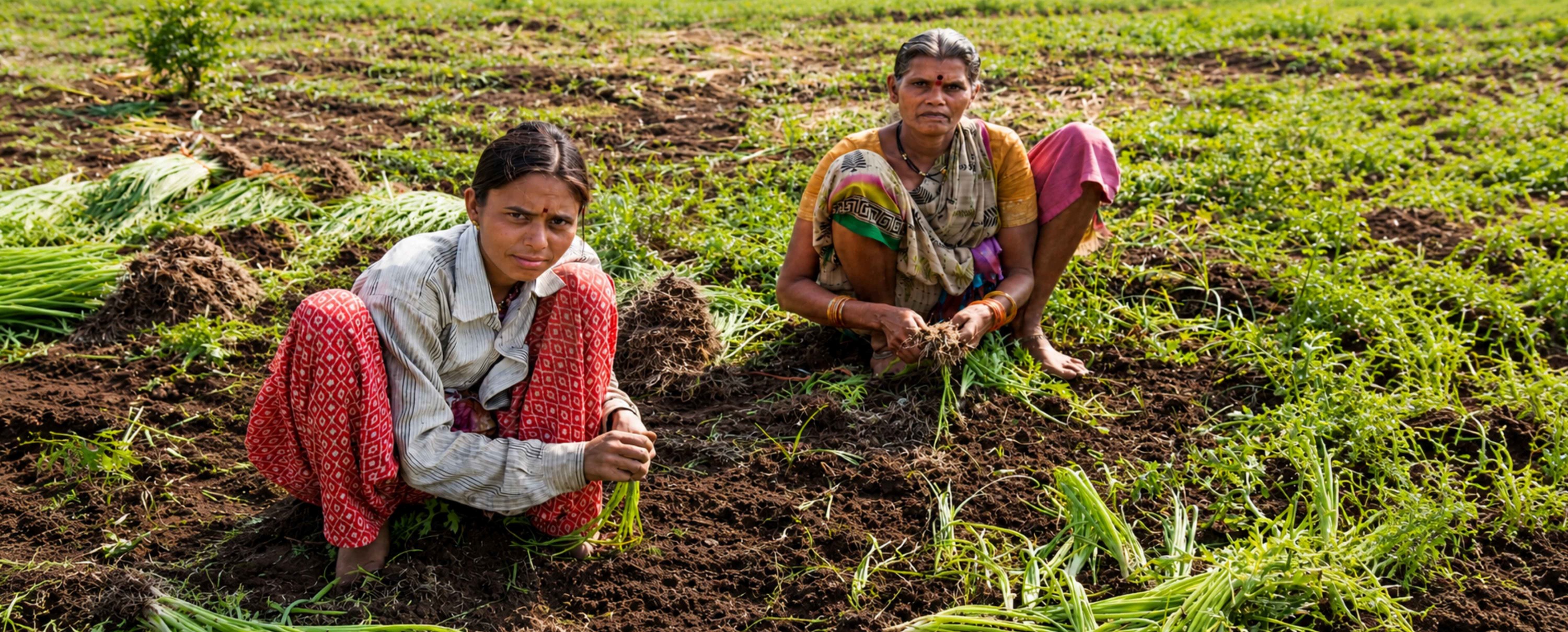
Vaishali Ghuge, 41, is a woman farmer from Maharasthra. Image: MSSRF/Lakshmi Kanth Bharathi
Fourty-one year old Vaishali Ghuge is a respected farmer and community leader from Dharashiv district in Maharashtra. In a drought prone region often associated with agrarian distress and farmer suicides, she has transformed not only her own livelihood but also that of thousands of other women. Through her work, she has trained and supported women in organic farming, water conservation, vermicomposting, poultry farming, and other sustainable agricultural practices.
Yet, despite her achievements and leadership, Vaishali has never been able to access many government schemes and subsidies meant for farmers. Reason: She does not own land in her name and is therefore not officially recognised as a farmer.
“Every time a woman farmer is denied a scheme or a loan, she is pushed back into the cycle of hardship and it has an immediate impact on the quantity and the quality of food she can grow and the improvements she can make on her farm,” said Ghuge, adding that important schemes that support crucial aspects of agri-food systems such as farm ponds, sprinklers, well boring and construction, and initiatives under the Agricultural Technology Management Agency (ATMA) and many more are all linked to land ownership.
Agriculture remains the backbone of India's economy. According to the Periodic Labour Force Survey (PLFS), the sector accounted for 43% of the country's employment in 2025. Over the years, farming has become increasingly feminised, with rural women carrying out much of the agricultural work as men move to non-farm jobs in search of other sources of income. Today, women like Ghuge are estimated to contribute nearly 80% of the labour in rural agriculture, playing a key role in food production and farm livelihoods. However, lack of identity as farmers limits what they can achieve.
Prof. M. S. Swaminathan, the architect of India's Green Revolution and founder of the M. S. Swaminathan Research Foundation (MSSRF), recognised this gap many years ago. To address it, he proposed the Women Farmers' Entitlements Bill. The Bill was introduced in the Rajya Sabha in 2012 as a Private Member's Bill but lapsed the following year. The proposal, however, sparked an important national discussion on the role, rights, and recognition of women in agriculture.
The Government of Maharashtra is now developing a Women Farmers’ Entitlements Bill, with MSSRF as its lead partner and the Vidhi Centre for Legal Policy as a legal drafting partner.
“If passed, it will be a landmark initiative,” said Dr R. V. Bhavani, senior fellow at MSSRF adding that a series of multistakeholder consultations have been held across Maharashtra this year, bringing together women farmers, civil society organisations, government officials, bankers, experts and other women farmer members of the Mahila Kisan Adhikaar Manch (MAKAAM) to discuss challenges faced by women on the ground.
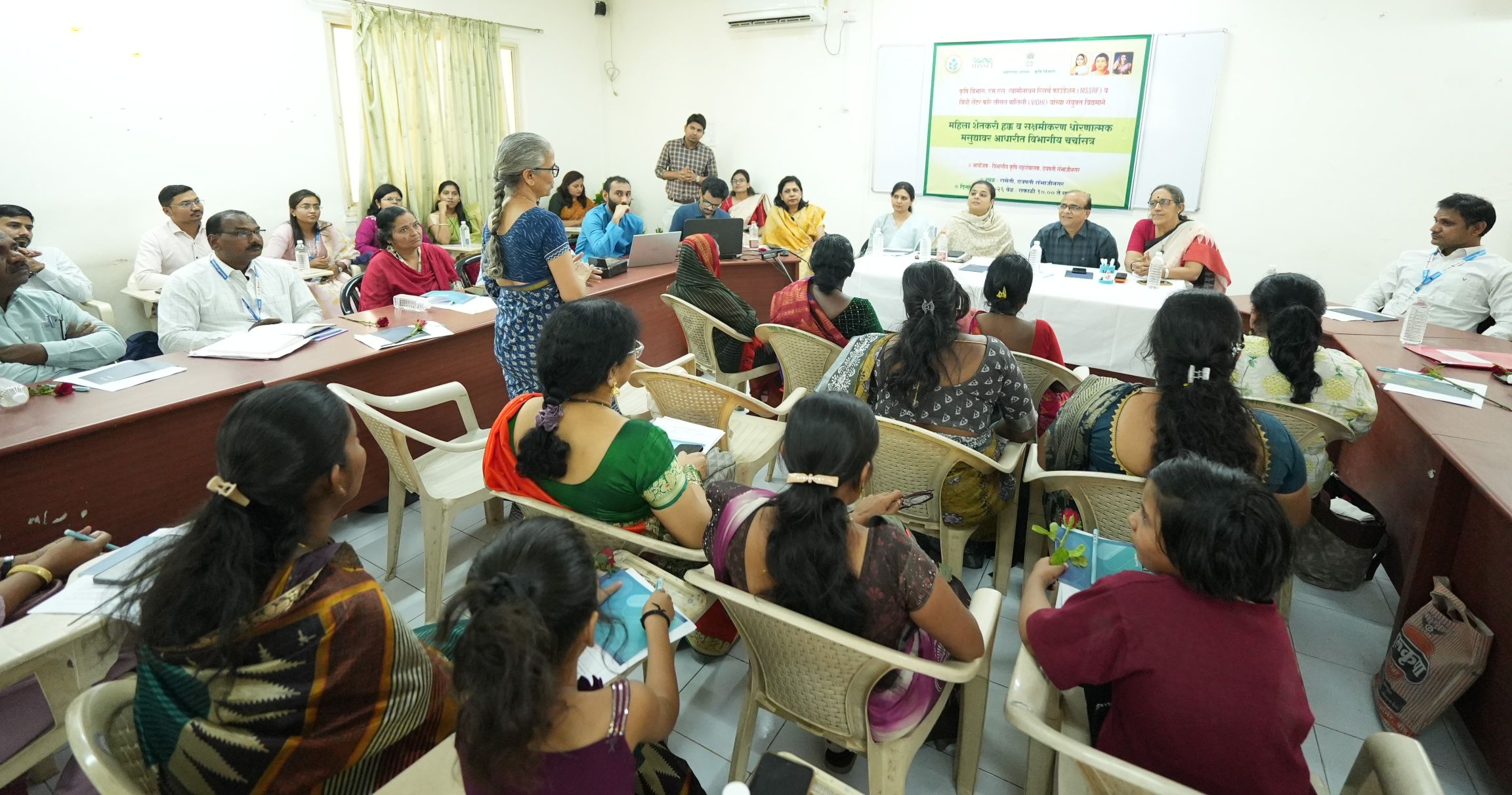
A participant speaks at a multistakeholder consultation in Maharashtra. Image: MSSRF/Lakshmi Kanth Bharathi
During the consultations, the participants highlighted how lack of formal recognition as farmers and the absence of land titles in their names severely limit women’s access to credit, institutional loans, water, and a wide range of government schemes. These discussions are timely as the United Nations declared 2026 as the International Year of the Womaen Farmer, to spotlight the wide range of roles women play in the agrifood systems.
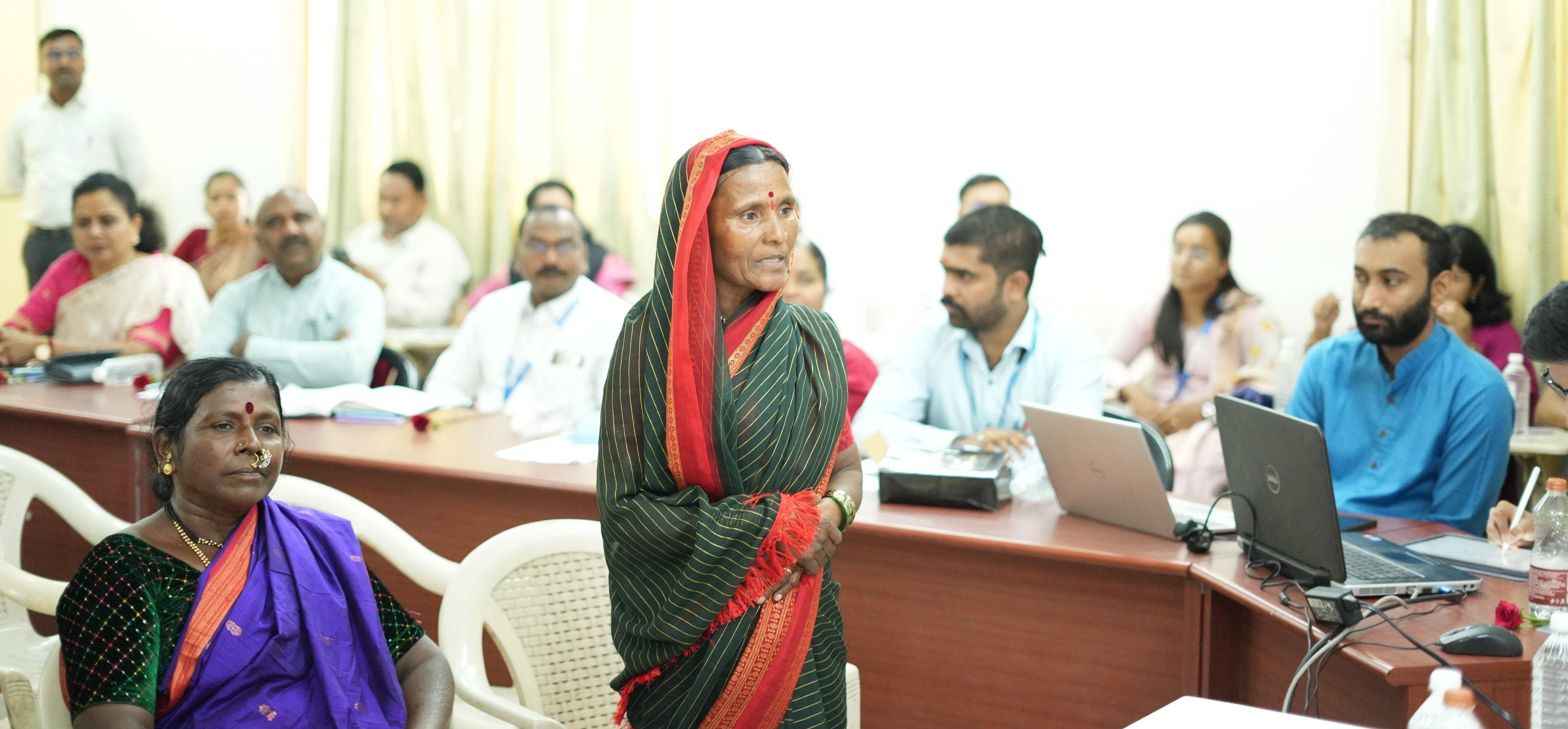
A woman farmer speaks at multistakeholder consultation in Maharasthra. Image: MSSRF/Lakshmi Kanth Bharathi
According to the UN, women farmers are all women working in agrifood systems in different capacities across all segments of value chains and this includes farmers, producers, peasants, family and smallholder farmers, seasonal labourers, fishers, fish workers, beekeepers, pastoralists, foresters, processors, traders, traditional knowledge holders, women in agricultural sciences, formal and informal workers, and rural entrepreneurs.
“We often picture a man working in a field when we think of a farmer. It is time we change that image. A woman is a famer too. And farming is not just about growing crops,” said Dr Soumya Swaminathan, Chairperson of MSSRF. “This recognistion, this sensitisation, will happen only through policy change. Women farmers today are bearing the double burden of navigating the systemic barriers and the challenges posed by climate change and they deserve all the support,” she added.
Vaishali Ghuge agrees. She found support in Swayam Shikshan Prayog, an NGO that trained her in organic farming and other farming allied practices. Today she earns in lakhs through her vermicomposting, poultry and dairy farming, biogas production and other interventions on her 1.5 acre farm. “Any women farmer can transform her life with the right support. The government should extend such opportunities,” said Ghuge.
Jyoti Shelar is the Head of Communications and Donor Outreach at MSSRF.