
MSSRF Hosts Policy Workshop on Ecological Intensification through Co-flowering Crops
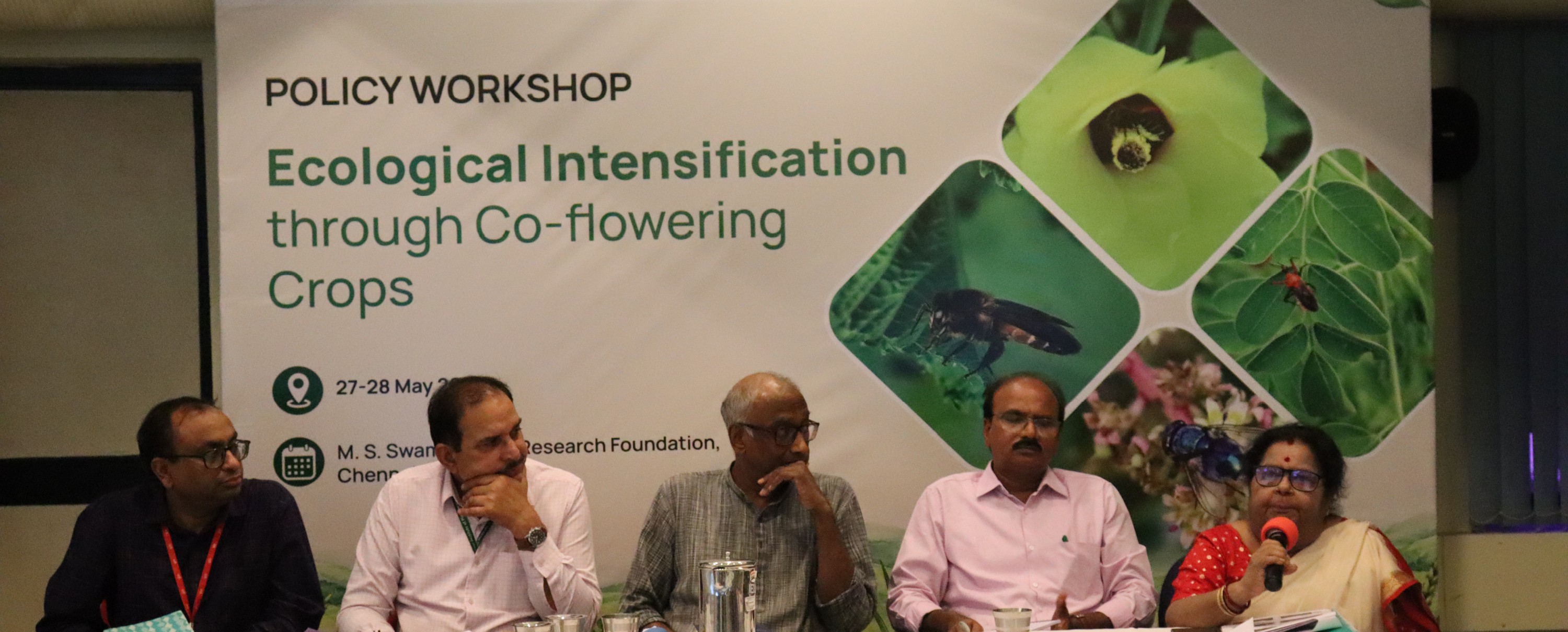
The M.S. Swaminathan Research Foundation (MSSRF), in partnership with the University of Reading, United Kingdom, organised a two-day policy workshop on “Ecological Intensification through Co-flowering Crops” on May 27-28. The workshop discussed sustainable farming practices that support biodiversity, strengthen ecosystem services, and improve farmers’ resilience. It brought together policymakers, researchers, NGOs, scientists, and practitioners working in natural farming, regenerative agriculture, and nature-positive solutions.
Ecological intensification refers to farming methods that increase crop yields by using natural ecosystem services instead of relying heavily on synthetic chemicals. For example, it includes encouraging natural predators to control pests, planting crops that support pollinators, and rotating crops to break pest cycles.
“There has been increasing discussion on how ecological intensification can become an important part of agroecology,” said Dr Rengalakshmi R, Executive Director, Area Operations at MSSRF, during the inaugural session of the workshop. “At MSSRF, we have been working through partnerships on ecological intensification, understanding the challenges farmers face in adopting these co-cropping methods, conducting field workshops for farmers, jointly identify the suitable co-crops and engaging with other stakeholders,” she said.
MSSRF Chairperson Dr. Soumya Swaminathan said the topic was very important. “We are facing challenges from climate change and the excessive use of chemical inputs in agriculture. There are also concerns about health impacts, including chemical residues on vegetables and their effects on pollinators and the ecosystem services they provide. It is important to clearly measure these impacts,” she said.
Professors Micheal Garratt and Deepa Senapathi from the Department of Sustainable Land Management at the University of Reading presented insights from their project, Translating Research Opportunities to Enhance Pollination Benefits to Economically Important Crops and Improve Livelihoods (TROPICAL). Their work combined UK-based scientific evidence with local field knowledge from farmers in Tamil Nadu and Puducherry. They shared examples such as growing sesame around mango orchards and using perennial redgram and marigold around moringa crops. These practices increased yields and also provided added benefits such as better nutrition and additional income for farmers. However, they noted that ecological intensification practices are highly context and crop specific.
Participants also discussed the importance of strengthening natural enemy populations for pest control, the role of the soil microbiome (below ground biodiversity), and the motivations and barriers for farmers in adopting these practices.
“All these inputs will go into a targeted policy brief for Tamil Nadu and Puducherry, and later at the national level,” said Dr Rengalakshmi.