Why is ghost gear a growing threat to the oceans and coastal livelihoods?
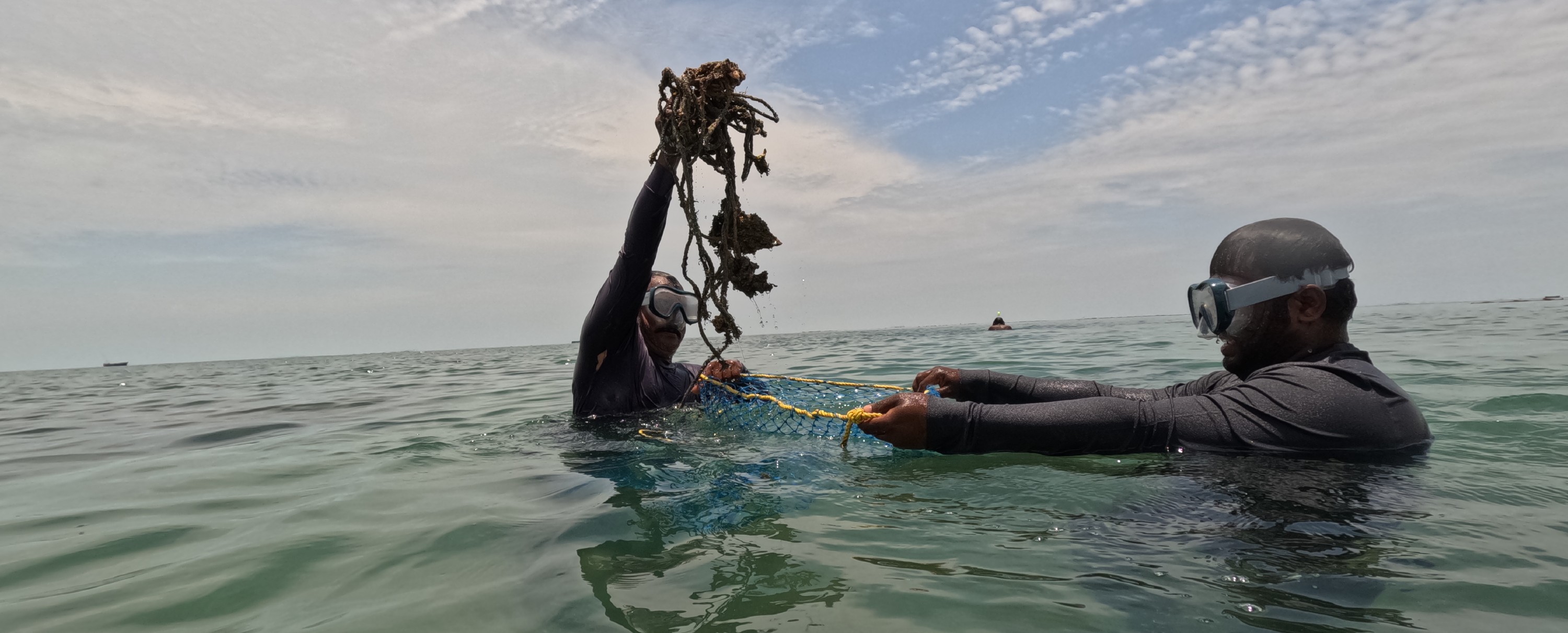
Imagine tonnes of plastic nets drifting through the deep sea. They trap fish, crabs, turtles and other marine life, and get caught in the coral reefs gradually destroying them. This lost fishing equipment is known as ghost gear includes nets, ropes, lines and traps that are abandoned, lost, or otherwise discarded in the ocean. Even when lost, it continues to catch fish- a phenomenon known as ‘ghost fishing’ that endangers the marine life and impacts coastal communities and their livelihoods.
Most fishing gear is synthetic and made from durable, non-biodegradable plastics- mainly nylon, polypropylene, polyethylene, and polyester- that resist natural decomposition to persist and accumulate in the ocean. Environmental weathering breaks it down over time into smaller fragments known as microplastics (less than 5 mm) that enter the marine ecosystems and the food chain, posing an urgent threat for ocean health and human health.
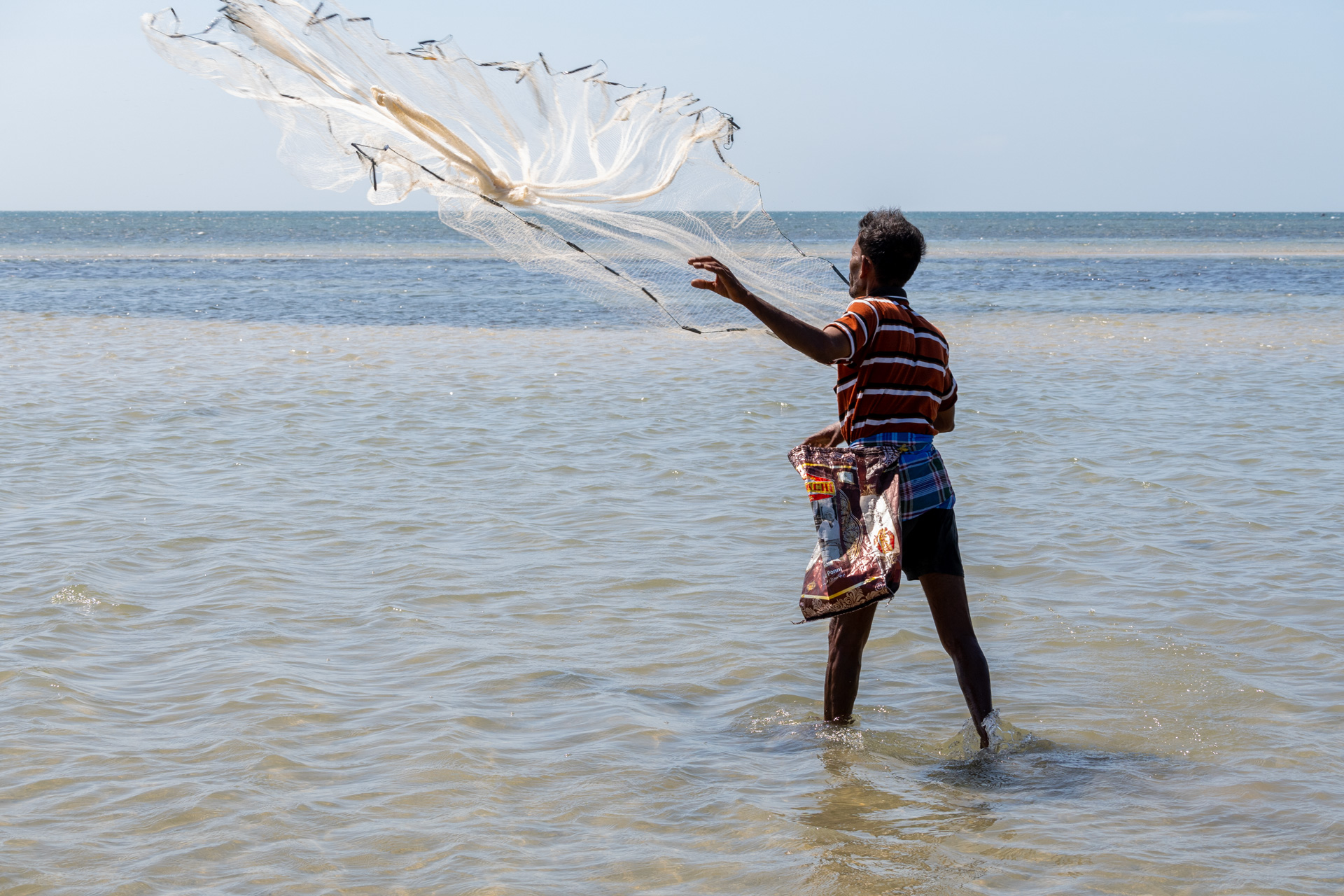
Photo: MSSRF / Alberto Miti (The Lexicon)
Tonnes of Plastic
Global estimates show that hundreds of thousands of tonnes of fishing gear enter the ocean annually to become ghost gear. According to the World Wide Fund for Nature (WWF), ghost gear makes up as much as 70% by weight of the ocean's plastics.
The Food and Agriculture Organisation of the United Nations (FAO) estimate fishing gear to be about 10% by volume of all marine debris. The Ocean Cleanup gauges that in some areas, such as the Great Pacific Garbage Patch- the world's largest accumulation zone of marine debris, located between California and Hawaii- abandoned fishing nets make up 46% of the accumulated total plastic waste.
In 2024-2025, the M.S. Swaminathan Research Foundation (MSSRF) marine debris removal initiative in the Gulf of Mannar and Palk Bay regions pulled out 40 tonnes of marine debris from approximately 303 hectares. Of this, a striking 15 tonnes was ghost gear with the rest constituting plastic bottles, plastic packets, glass bottles, footwear, synthetic fibres and textiles.
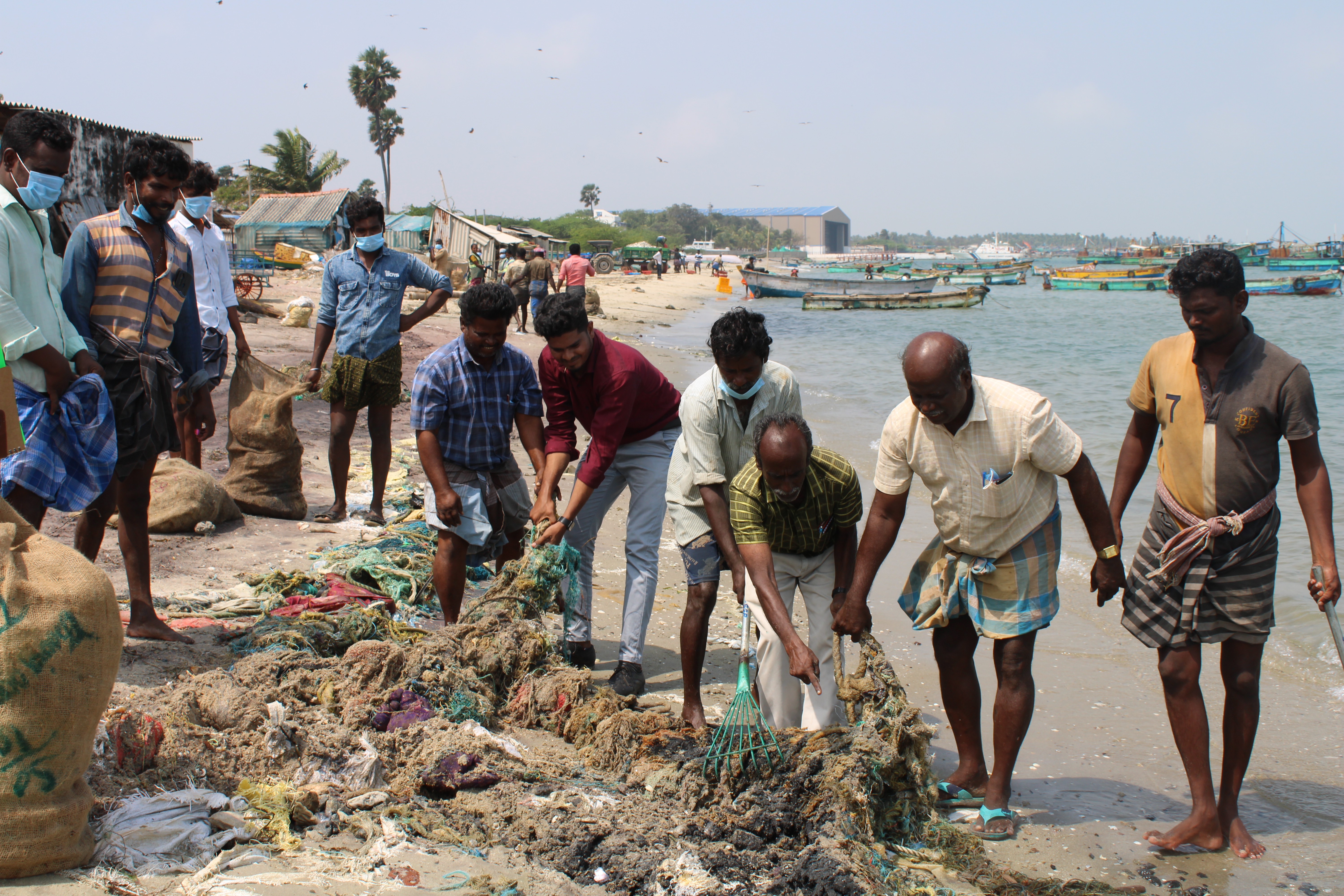
Photo: MSSRF Archives
How does so much fishing gear become ghost gear in the first place? It is not always due to carelessness. Fishing is difficult work and often carried out in uncertain conditions and gear may get swept away due to rough weather, strong currents, and nets get torn and caught on sharp structures or the seabed itself. Studies estimate that 5.7% of all fishing nets, 8.6% of traps and pots, and 29% of all fishing lines used globally are lost every year.
In fishing harbours globally including on the Indian coast, retrieved ghost gear often gets mixed with general waste. The lack of adequate and proper segregation and recycling systems leads them to either get dumped or burned, and they most likely get washed into the ocean again.
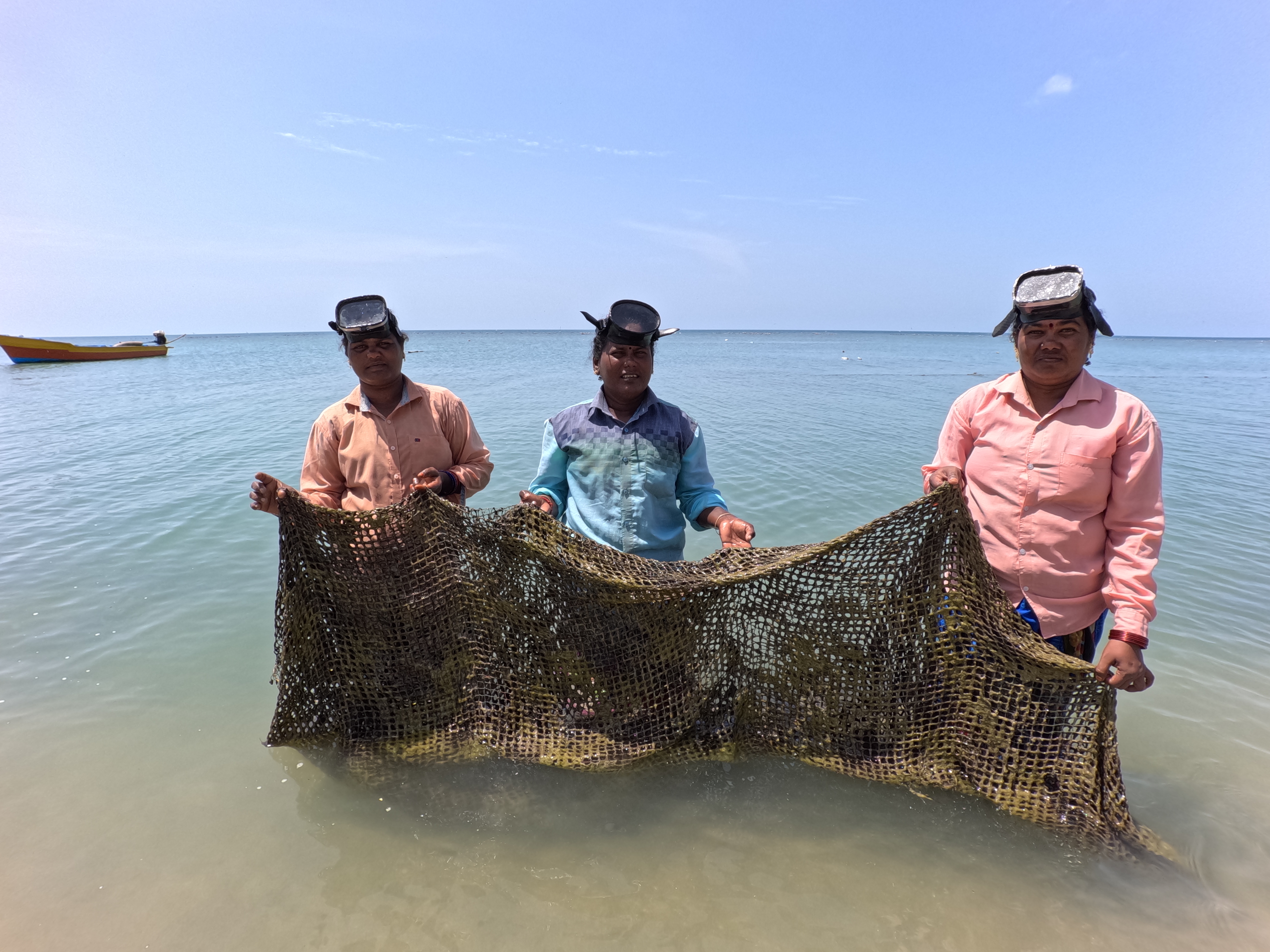
Photo: MSSRF Archives
Ghost gear and marine plastic pollution broadly, is not just an environmental issue. It is a deeper, systemic problem that affects many areas of life, and poses an urgent threat today. A collective, circular approach is required to pool resources to find long-lasting and practical solutions. Fishing communities require more support, as even those who want to dispose of ghost gear responsibly find limited options, something that needs to be addressed through better infrastructure and the right incentives.
MSSRF at Work
Adopting a circular approach to tackle ghost gear has been central to MSSRF’s interventions with three interconnected steps- restrict, retrieve, and recycle.
Working with communities to address ghost gear through capacity-building has been vital. In a span of one year between 2024-2025, four capacity building workshops trained 406 fisherfolk (including 300 men and 106 women) in Tamil Nadu, with our larger village outreach through meetings and street plays reaching over 1303 fisherfolk across 16 villages. Additionally, 837 school and college students were educated about these hazards.
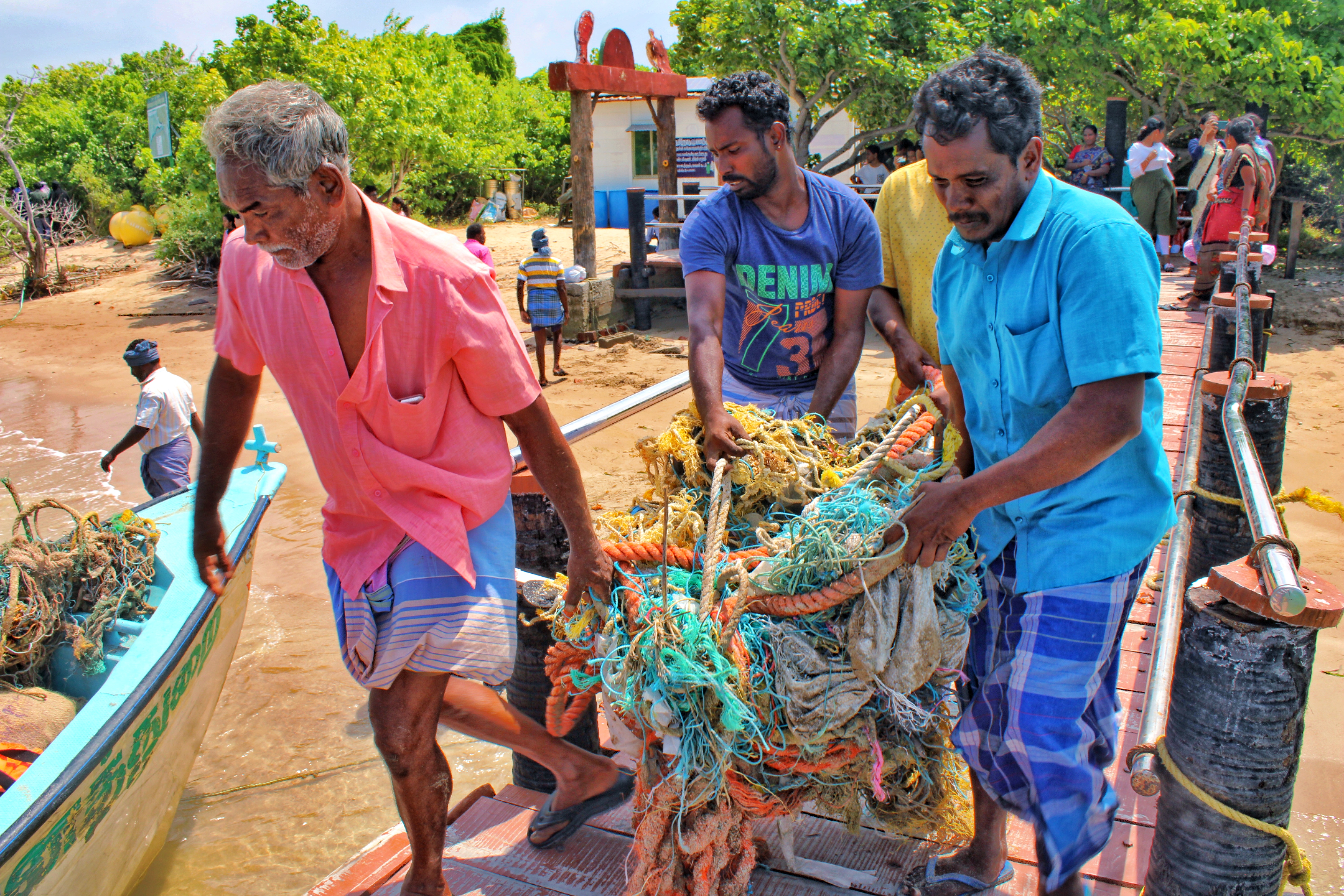
Photo: MSSRF Archives
Several training sessions have been conducted on ghost gear upcycling with ghost gear management committees and segregation centres have been set up in Vethalai and Vellapatti with women’s Self-Help Groups (SHGs) playing a key implementation role. This work by MSSRF has been supported by the UNDP Small Grants Programmes and the HCL Foundation.
MSSRF has also led several multi stakeholder consultations that brought together policymakers, scientists, fisheries experts, and community leaders to discuss ways forward in tackling ghost gear. These discussions have helped build shared consensus and led to the development of the Ghost Gear Voluntary Code of Practice.
“Awareness is key to involving fisherfolk in tackling ghost gear,” said Dr. Velvizhi S., Area Director, Coastal Resources and Fisheries at the M. S. Swaminathan Research Foundation (MSSRF). “Before our work began, many fishers ignored marine debris. Even when they collected it during their fishing operations, they simply threw it back to the sea while sorting through fish catches. After our interventions, fishers started to take the retrieved ghost gears to land using collection boxes and keep it in the specific collection places at the landing centre. This debris is sorted by women SHGs at the two segregation centres MSSRF set up into, ropes, plastic bottles, glass bottles, trawl nets, gill nets and more categories to provide the women a steady source of income. Another group of women used the ghost nets to make products like mats, bags, pouches, dreamcatchers, and started a microenterprise,” she said.

Photo: MSSRF Archives
To effectively translate awareness into action, MSSRF’s on-going work is focussed on enhancing the circularity model to tackle ghost gear, linking with government established fish net centres for long term sustainability, and digital interventions to track and retrieve lost gear. One such digital intervention is MSSRF’s Fisher Friend Mobile Application that has introduced a feature called ‘ghost gear marking’ to enhance ghost gear reporting through photo uploads and geotagging.
“While Coastal communities face the highest impacts of marine debris every day, they are also best placed to solve the problem. With the right support, they can lead the way in preventing loss, retrieving marine plastic debris, and turn it into useful resources,” Dr. Velvizhi added.
Gayathri Govindarajan is a Scientist, Coastal Resources and Fisheries at MSSRF.
Sibinthar Anbu is a Project Associate, Coastal Resources and Fisheries at MSSRF.