Capturing Wetlands: Stories Through the Lens
India’s wetlands span approximately 15.3 million hectares, covering about 4.6% of the country’s land area. Yet, they are disappearing at an alarming rate; nearly 40% have been lost over the past three decades due to urbanisation, pollution, and encroachment.
On February 2, 2026—World Wetlands Day, the M.S. Swaminathan Research Foundation (MSSRF) announced a Wetlands Photo Competition to spark conversations around the rapid loss of these critical landscapes and highlight their importance.
A total of 350 entries were received from across the country. Through their lenses, photographers captured the rich biodiversity of wetlands and their connections to wider ecosystems. Presented here are the photographs that stood out and won the top prizes, telling powerful stories of wetlands worth protecting:
Top 3 Entries [Non-professional]
First Prize Winner
Sarus Sunset - Bharatpur, Rajasthan
By Naveen Kumar Suyambu Durai
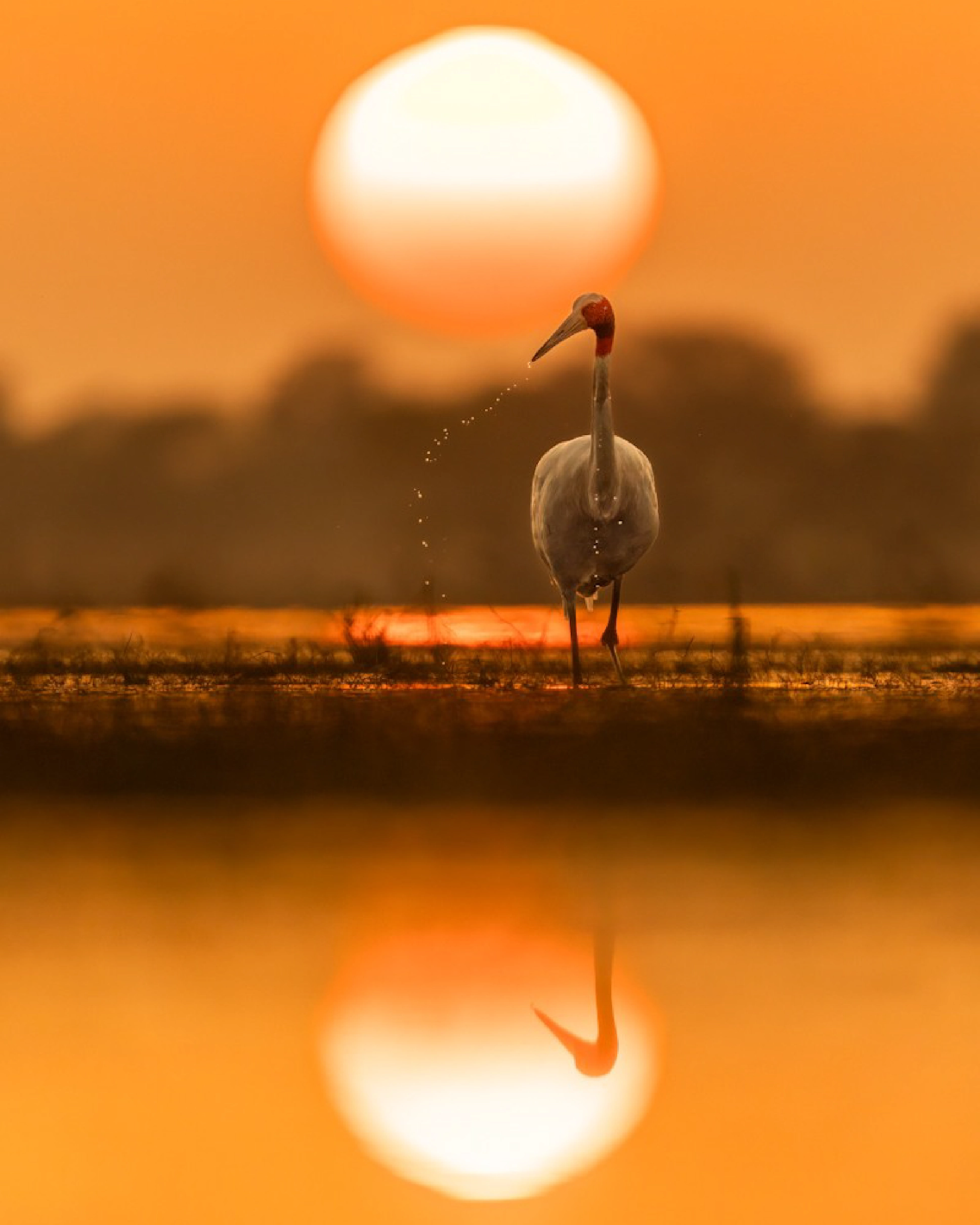
A Sarus Crane (Antigone antigone) stands in the wetlands of Bharatpur at sunset, its reflection mirrored in still water tinted by fading light. As the tallest flying bird in the world, the Sarus depends on freshwater marshes, shallow lakes, and seasonal wetlands for breeding and feeding. Keoladeo’s mosaic of wetlands, sustained through careful water management, supports diverse resident and migratory species. In Indian folklore, the Sarus crane symbolizes lifelong partnership and fidelity, often seen in devoted pairs. Its presence reflects not only the ecological health of wetlands but also the enduring relationship between local communities and these life-sustaining landscapes.
Second Prize Winner
Ecosystem vs Economy- Bherai Wetlands, Gujarat
By Dhaval Bhadania
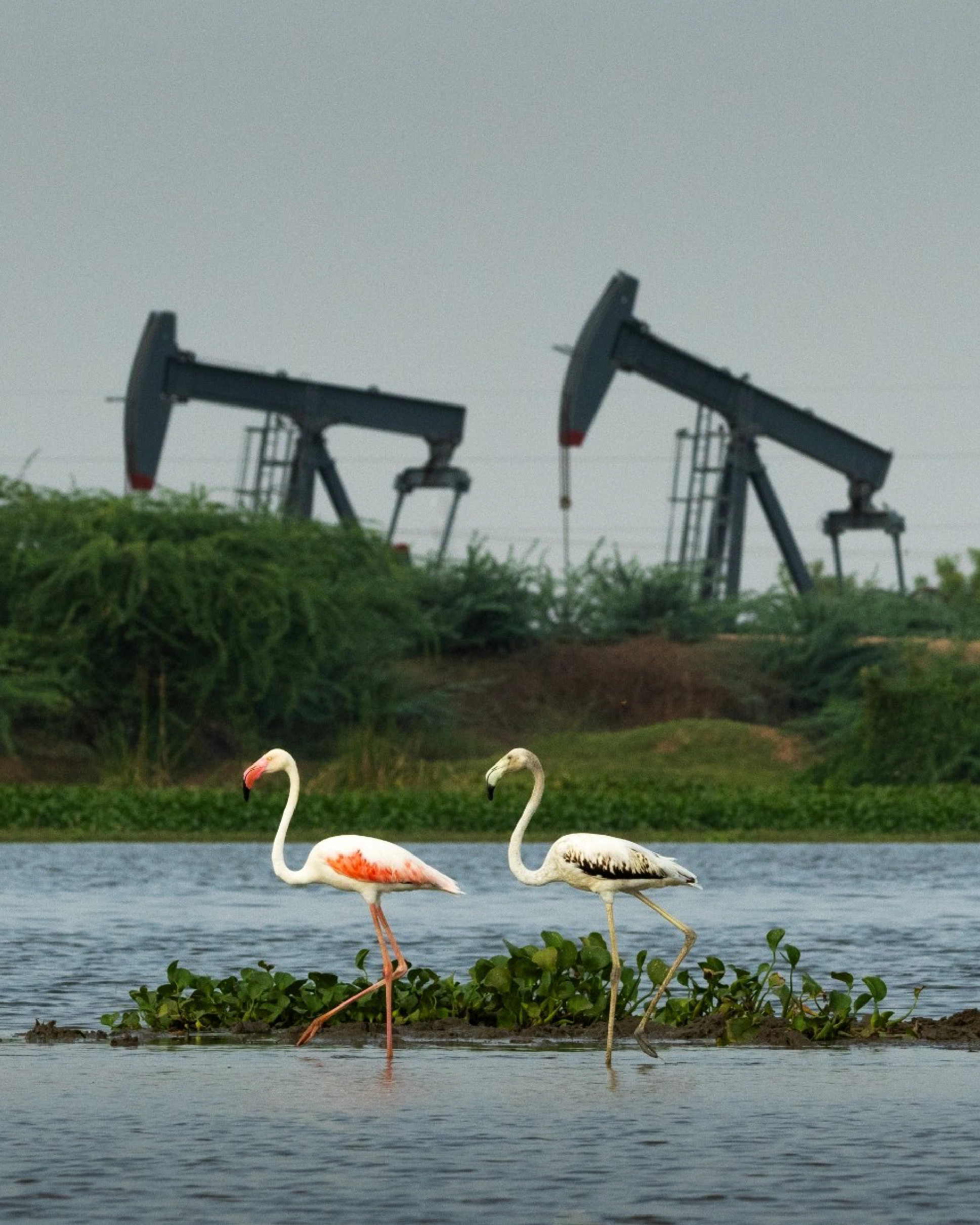
A haunting juxtaposition of nature and industry, in this image I captured two flamingos wading in a shallow water of Bherai wetland, with two oil rigs looming ominously in the background. This close proximity highlights the precarious existence of wetlands and migratory birds in and near industrial areas. Single oil spill can have dangerous impact on entire wetland and its ecosystem. This scene serves as a stark warning about the fragile balance between economic development and the survival of wetlands ecosystems.
Third Prize Winner
Beautiful hands at work - Bharatpur Bird Sanctuary, Rajasthan
By Kapil Kolte
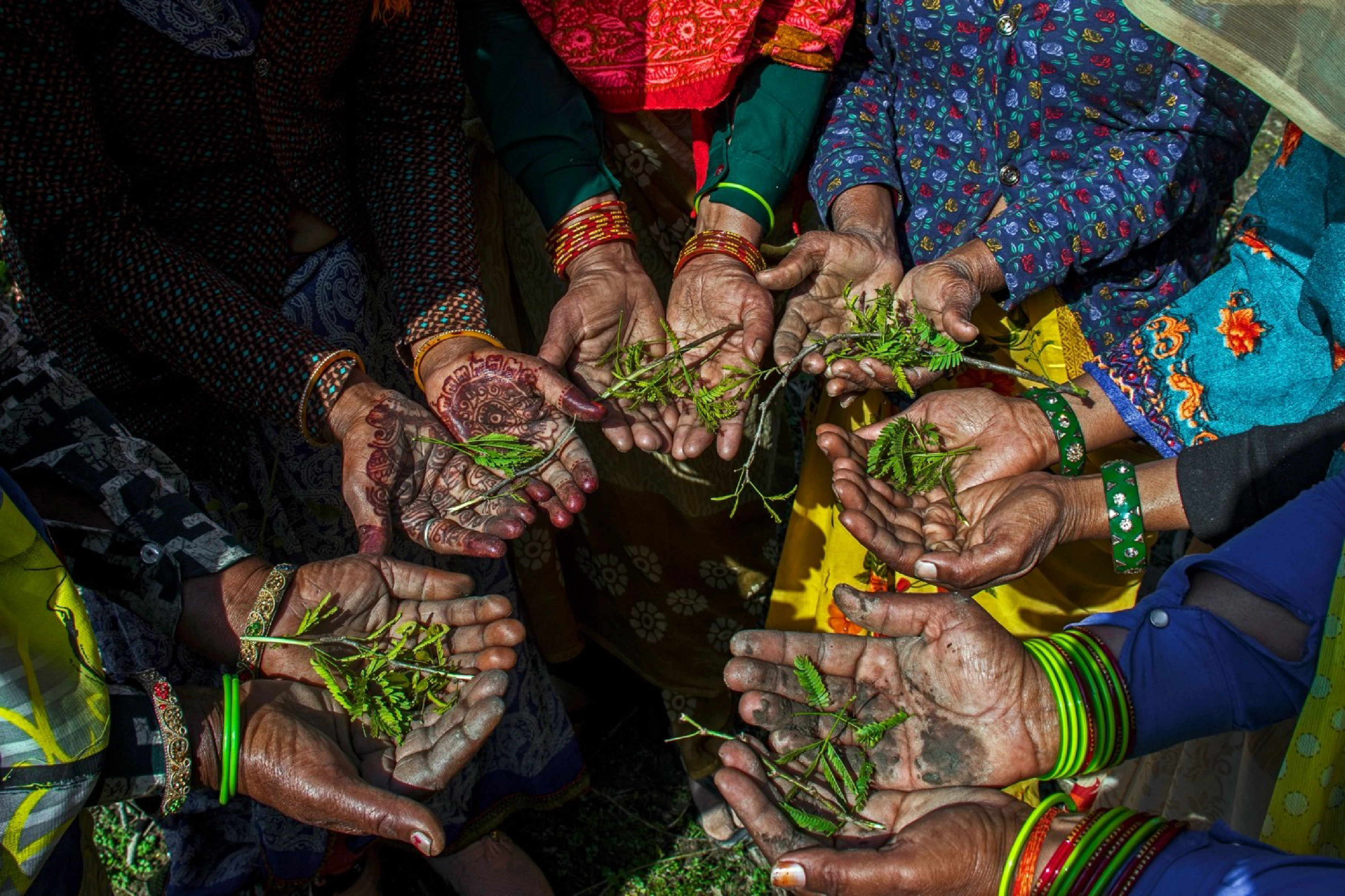
It was high noon at the Keoladeo National Park in Bharatpur. The sun was directly overhead, casting short, sharp shadows as a group of local female workers paused their difficult task.
Their mission was vital: clearing juliflora, an invasive "alien" plant that threatens the sanctuary’s delicate ecosystem. For hours, they had been pulling and cutting the stubborn weeds to ensure the native birds and plants could thrive once again.
As they gathered in a circle, they held out the small, green sprigs they had just uprooted. Their palms—stained with the dark earth of their labor and adorned with colorful glass bangles and traditional henna—told a story of deep connection to the land. Each crease in their skin represented a day of hard work in the heat.
These women are the quiet protectors of the sanctuary. Through their paid conservation efforts, they are not just removing a weed; they are painstakingly restoring the balance of nature. In the heat of the afternoon, their hardworking hands became a powerful symbol of hope for a greener, healthier Bharatpur.
Top 3 Entries [Professional Category]
First Prize Winner
Where Salt Paints the Wetland- Sambhar Lake, Rajasthan
By Abijith Soman
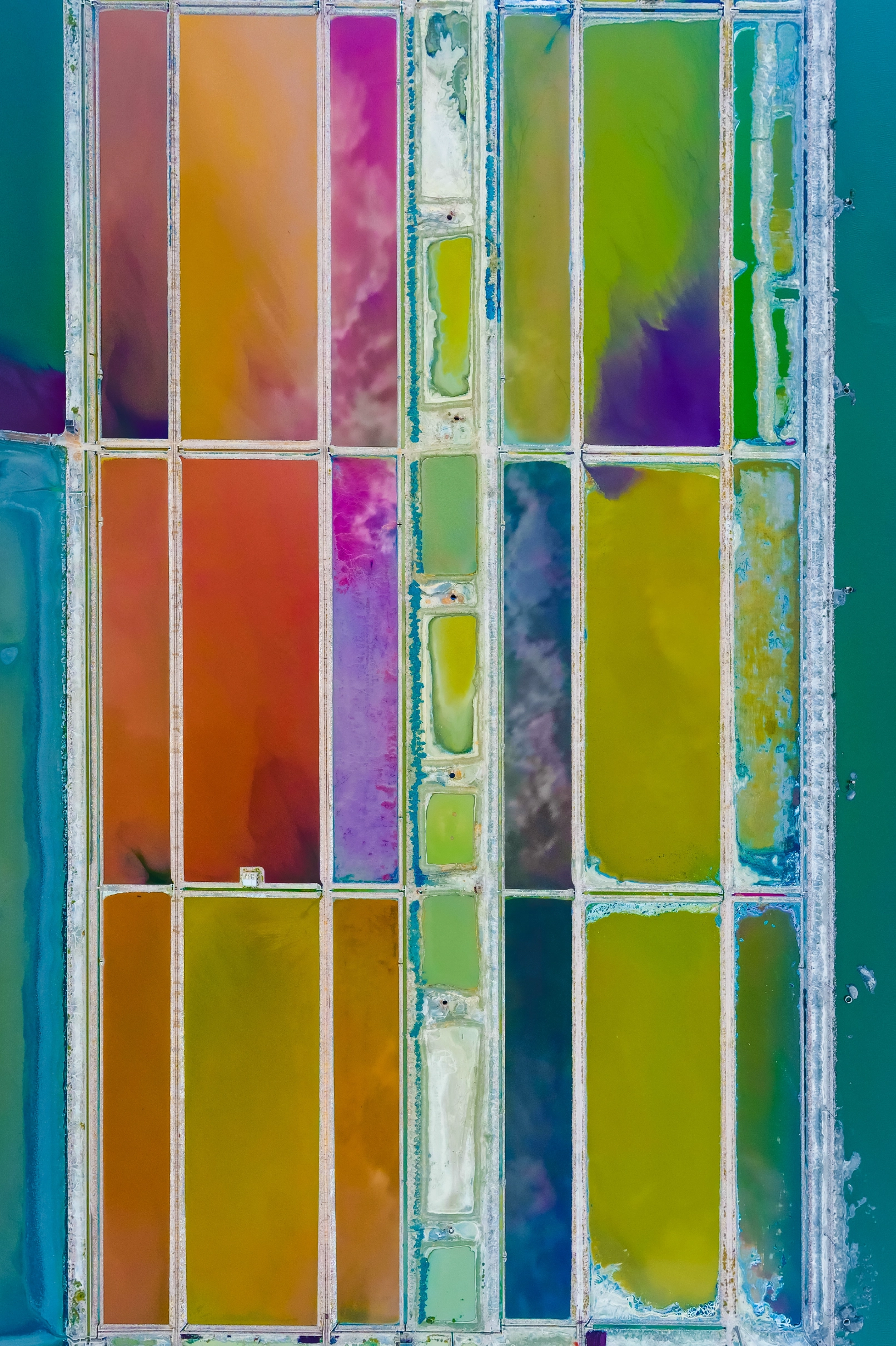
Sambhar Salt Lake in Rajasthan, before sunrise, is a vast inland saltwater wetland that reveals its true character only from above. As the light strengthened, the salt pans began to glow in unexpected shades of red, yellow, and green colors created naturally by salt-tolerant algae and changing salinity levels. What compelled me to capture this image was not just the abstract beauty, but the realization that this was a living wetland shaped by both ecological processes and generations of traditional salt harvesting.
From the ground, the lake felt endless and quiet, but from the air, its fragile geometry became clear. Sambhar is more than a salt production site, it is a critical wetland that sustains migratory birds, microorganisms, and local livelihoods. This perspective allowed me to document how water, culture, and ecology coexist, revealing the hidden patterns of a wetland that continues to sustain life in both visible and invisible ways.
Second Prize Winner
Livelihoods in the Wetlands- Gulf of Khambhat, Gujarat
By Kabir Dave
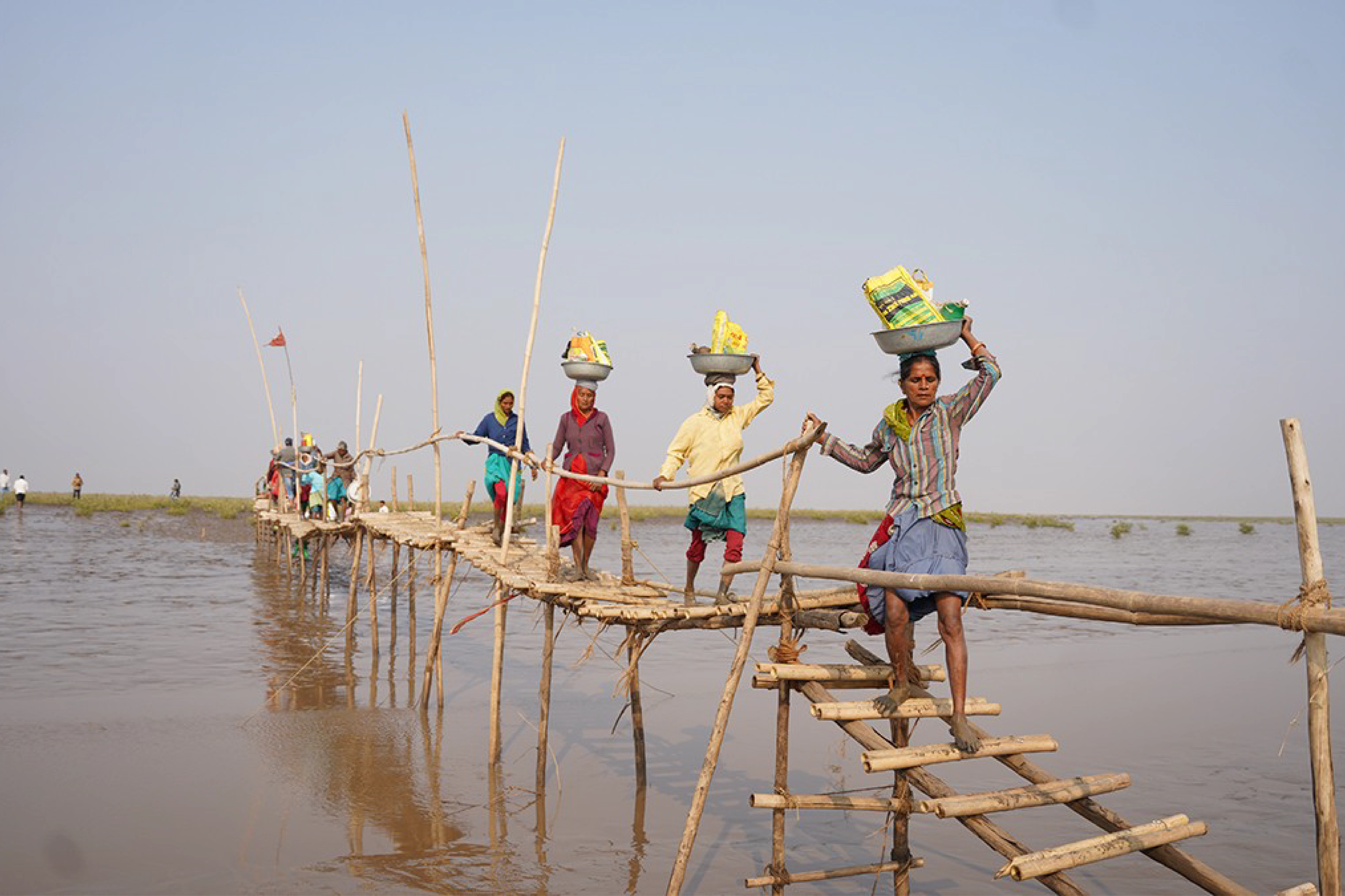
In this image, women cross a narrow bamboo bridge, suspended above tidal wetlands, on their way to working for mangrove restoration. For many coastal communities, wetlands are both workplace and inheritance. Women often move daily between land and water — fishing, collecting shellfish, working in salt pans, or participating in mangrove restoration. Women move through the wetlands not just as workers, but as knowledge holders. Livelihood here is inseparable from ecological understanding. Generations have observed the rhythms of tides, monsoons, and lunar cycles to determine when to plant saplings, when to harvest, and when to wait. The bridge becomes more than infrastructure; it symbolizes the intersection of labour, landscape, and generational memory. Each crossing reflects a lived relationship with wetlands — where survival, care, and culture are interwoven with the tides.
Third Prize Winner
Rhythms of Korapuzha - Kozhikode, Kerala
By Anoop K M
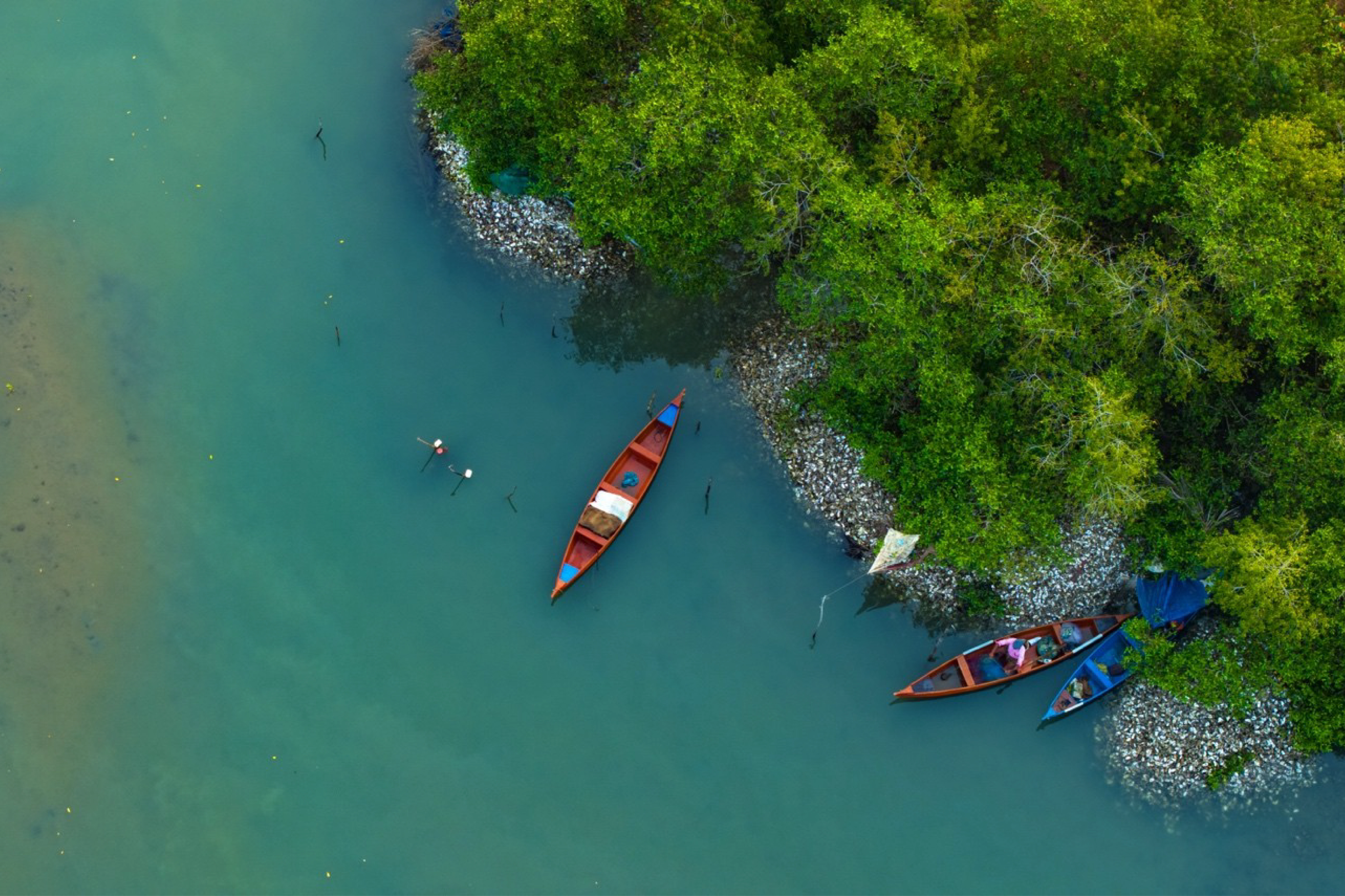
This aerial perspective captures the lush green canopy of trees and livelihoods of local communities through traditional fishing in Korapuzha river situated in Kozhikode, Kerala.