
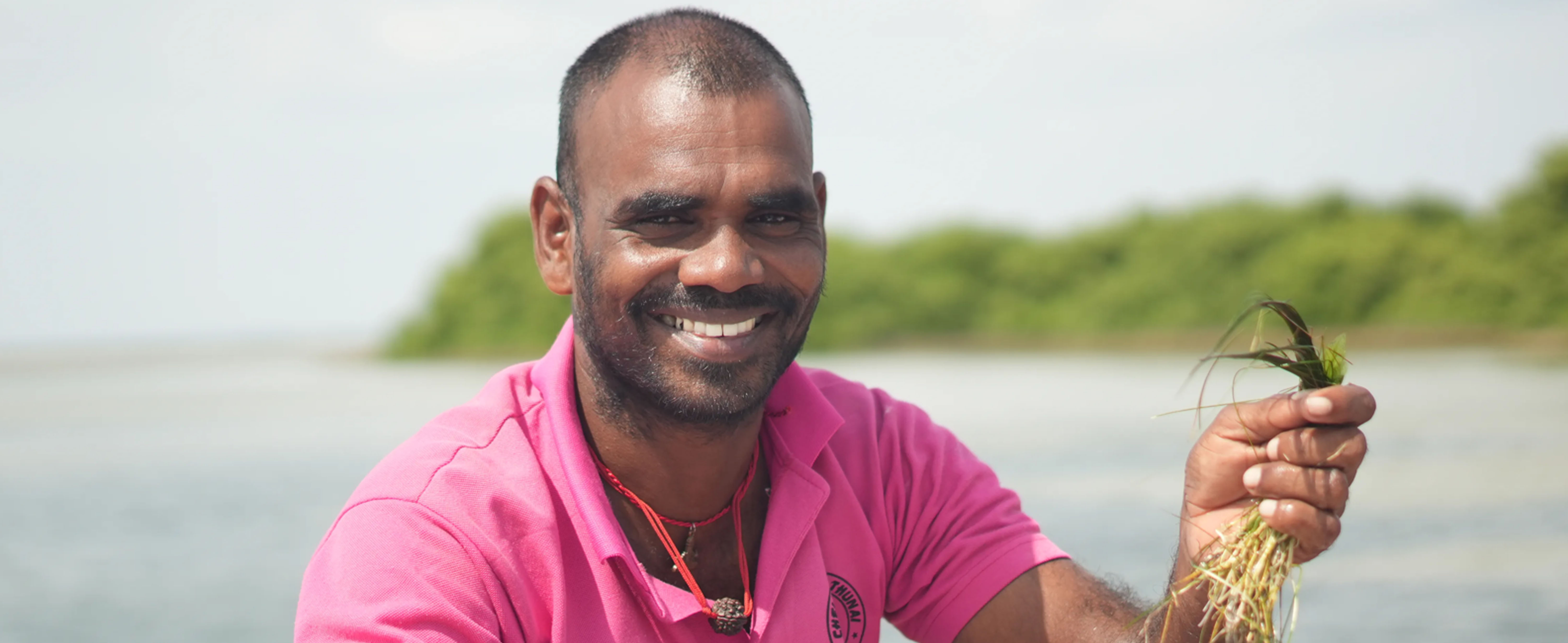
Pulicat Lake – Restoring Life Beneath the Waters
Pulicat Lake is a sprawling lagoon that shares its area between Tamil Nadu and Andhra Pradesh. This ecologically rich wetland, stretching over 450 km², has long been at the center of discussions around conservation, industrialisation, and the livelihoods of local communities. As stakeholders from government, private, and social sectors continue to deliberate on its future, one consensus emerges: Pulicat Lake needs restoration to preserve its fragile ecosystem. One promising solution is seagrass restoration.
Why Seagrass?
Seagrass meadows are more than underwater plants. They are living networks, supporting marine life, capturing carbon, and as a result offering sustenance to the local communities. As Project Seagrass puts it, “The overarching aim of seagrass restoration should be to maximise the biomass and biodiversity of meadows such that they support diverse and resilient ecosystem functioning and services for people and planet.”
For the fishermen and fisherwomen of Pulicat, the lake once meant abundance. But over the years, unchecked human activity has eroded both the lake and the community's way of life. During a recent visit by MSSRF, elders of the community spoke of how fishing was once a reliable source of income. Today, it has become uncertain, forcing the new generation to juggle odd jobs such as construction work, manual labour, auto driving to make ends meet.
MSSRF’s Intervention in Pulicat
The M.S. Swaminathan Research Foundation (MSSRF) is implementing a project with Centre for Sustainable Conservation Action and Protection of Ecosystems of the Seas (C- SCAPES) on the conservation and sustainable management of coastal ecosystems for increased resilience to climate change. As part of the project’s restoration efforts, the Pulicat Lake has been chosen as an area of interest for seagrass restoration to sequester carbon and revive the ecosystem. MSSRF identified existing seagrass beds and designed restoration efforts around them to improve survival rates of the seagrass. However, this alone isn’t enough.
MSSRF’s outreach efforts helped lay the groundwork for community involvement. Through awareness sessions, fishermen and fisherwomen understood how seagrass restoration could revive fish stocks, improve water quality, and benefit the next generation. With this clarity, they became active participants in the restoration process, helping embedding seagrass into the lagoon, providing insights into locations for restoration and building materials for the restoration process.

Guided by Global Standards, Grounded in Local Wisdom
Dr. Benjamin Jones of Project Seagrass reminds us that restoration must go beyond planting. It must rebuild ecosystems. The project’s researcher, Dr Utchimahali, mentions that biotic factors such as water salinity, temperature and tidal amplitude were considered before deciding on restoration sites and species.
Science Meets Community: A Collaborative Approach
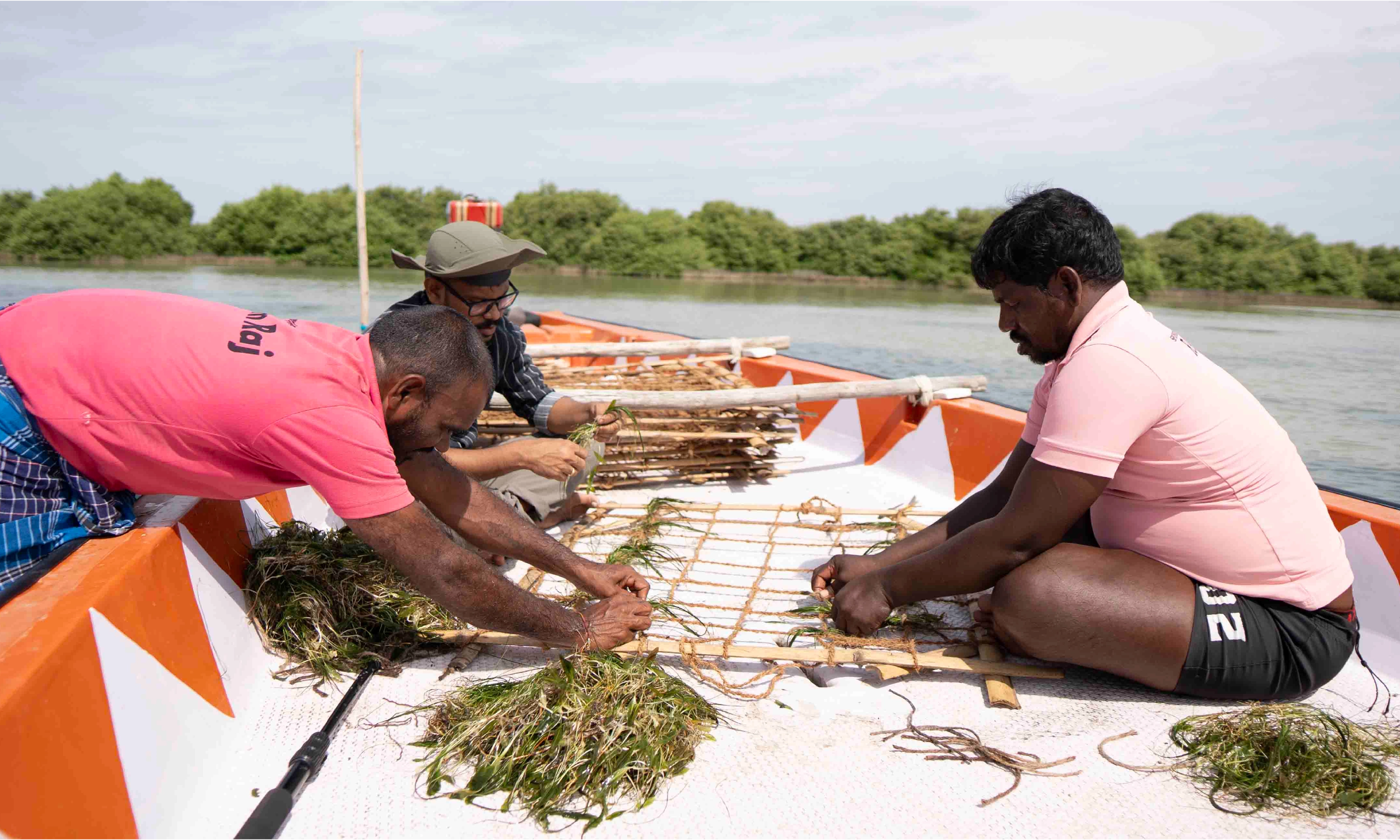
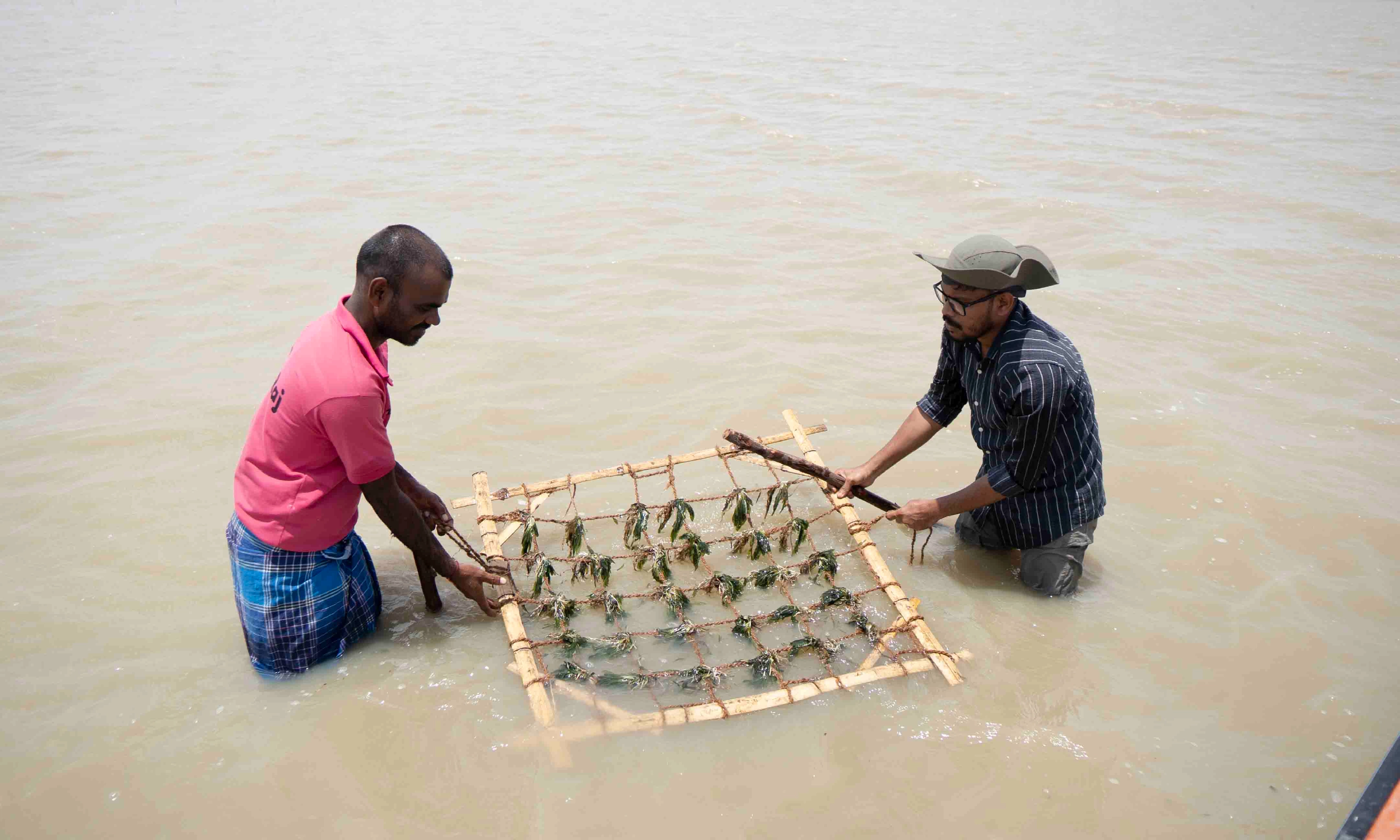
The restoration method is as thoughtful as it is sustainable. Bamboo frames, woven with coconut coir ropes of 8 mm, for planting springs collected from the dense donor sites. These biodegradable materials blend seamlessly into the lagoon’s bed. One fisherman family took on the responsibility of making these frames, understanding through MSSRF’s outreach that their work contributes to both ecosystem restoration and livelihood improvement.
The restoration method is as thoughtful as it is sustainable. Bamboo frames, woven with coconut coir ropes of 8 mm, for planting springs collected from the dense donor sites. These biodegradable materials blend seamlessly into the lagoon’s bed. One fisherman family took on the responsibility of making these frames, understanding through MSSRF’s outreach that their work contributes to both ecosystem restoration and livelihood improvement.
Across 10 hectares, seagrass shoots are embedded in a crisscross pattern to help revive the underwater meadows. The goal is clear: restore what was lost, protect what remains, and build resilience for what is to come.
Looking Forward: Reefs, Resilience, and Renewal
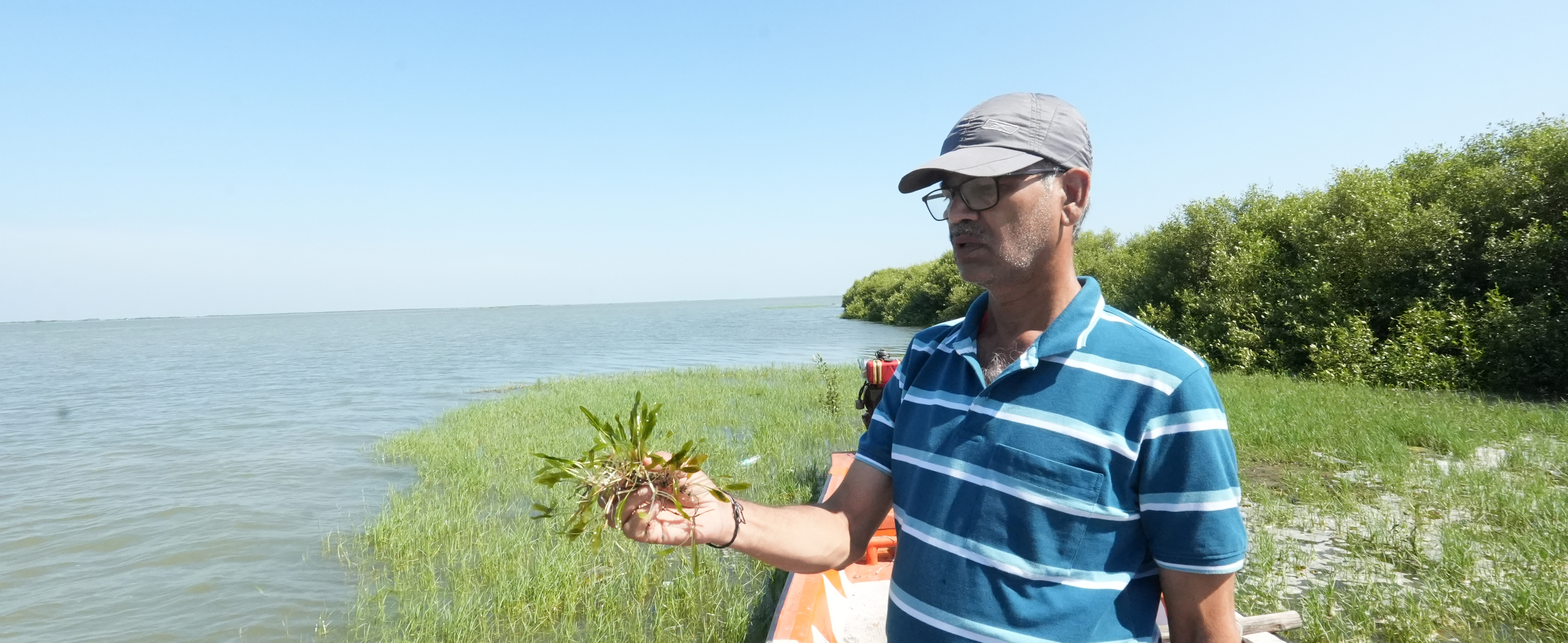
MSSRF’s vision doesn’t stop at seagrass restoration. Plans are underway to introduce artificial reefs, creating habitats for marine life and enhancing biodiversity Dr. Ramasubramanian R., Senior Fellow at MSSRF has three decades of experience in working on restoration projects in marine ecosystems. He shares his insights on the importance of such restoration projects, “The coastal ecosystems provide multiple ecosystems services such as feeding and breeding ground for the marine organisms and also contribute to the carbon sink. Coastal researchers are now paying attention to this neglected ecosystem worldwide. Conservation and restoration of these ecosystems are important to sustain the ecosystem services."
Monitoring and evaluation for such projects guides meaningful change. By studying the impact of restoration efforts, scientists can understand what is working, what needs adjustment, and how to maximise the benefits for both, the ecosystem and the communities. These insights help refine techniques, improve survival rates of restored ecosystems, and ensure that interventions are not just symbolic, but truly transformative.
In the case of the Pulicat Lake, monitoring means more than measuring seagrass growth. It ensures tracking the return of fish, the revival of biodiversity, and the gradual restoration of livelihoods. It also includes listening to the stories of the fishing community who have seen their lake’s health decline. It ensures that every rupee spent, every hour of effort invested leads to lasting impact.
Monitoring and evaluation post intervention builds the evidence base for future action. They help policymakers make informed decisions, encourage replication in other vulnerable ecosystems, and foster trust among communities who are often the first to feel the effects of environmental degradation. In essence, it turns restoration from a one-time effort into a sustained journey of resilience, learning, and hope.
Pulicat Lake is more than a body of water for the communities that depend on it. Through seagrass restoration, MSSRF is not just reviving an ecosystem, it is ensuring the community, and the ecosystem thrive in sustainable harmony, following the vision of Biohappiness as defined by Prof M. S. Swaminathan.
Shriya Naidu is a Science Communications Manager at MSSRF.